
Cómo optimizar su carta de presentación y su currículum con palabras clave

Las palabras clave suelen considerarse un requisito técnico, pero tienen una finalidad práctica. Son los términos que utilizan las empresas para definir los puestos y evaluar a los candidatos en las descripciones de los puestos de trabajo y los sistemas de selección. Si su currículum y su carta de presentación no reflejan claramente ese lenguaje, su experiencia puede pasar desapercibida. Utilizar eficazmente las palabras clave en el currículum no consiste en añadir más palabras, sino en elegir las palabras adecuadas para describir su experiencia, de modo que las empresas puedan comprender rápidamente si usted encaja en el perfil durante el proceso de búsqueda de empleo.
Palabras clave para la carta de presentación y el currículum
Su currículum y su carta de presentación tienen fines distintos, pero ambos se basan en el mismo lenguaje subyacente. Las palabras clave del currículum son términos o expresiones concretas que describen las habilidades, las herramientas y las responsabilidades que requiere un puesto. Las empresas utilizan estos términos para definir sus expectativas, y los sistemas de gestión de candidaturas los emplean para clasificar y ordenar las solicitudes antes de que un responsable de selección las revise.
Por ejemplo, un puesto en el ámbito empresarial puede incluir «análisis de datos», «elaboración de informes» y «mejora de procesos», mientras que un puesto en el ámbito sanitario puede incluir «atención al paciente», «documentación clínica» y «coordinación asistencial». Estas palabras clave reflejan cómo se lleva a cabo el trabajo en ese ámbito y indican lo que los empleadores esperan de los candidatos.
Las palabras clave del currículum son importantes porque ayudan a los sistemas de seguimiento de candidatos a identificar a los candidatos pertinentes y permiten a los responsables de contratación evaluar rápidamente su adecuación al puesto. Su carta de presentación debe reforzar esas palabras clave mostrando cómo usted las ha aplicado en una situación concreta. Si una palabra clave no se respalda con pruebas claras de su experiencia, se crea una brecha entre lo que usted afirma y lo que usted puede demostrar.

Optimización con las mejores palabras clave
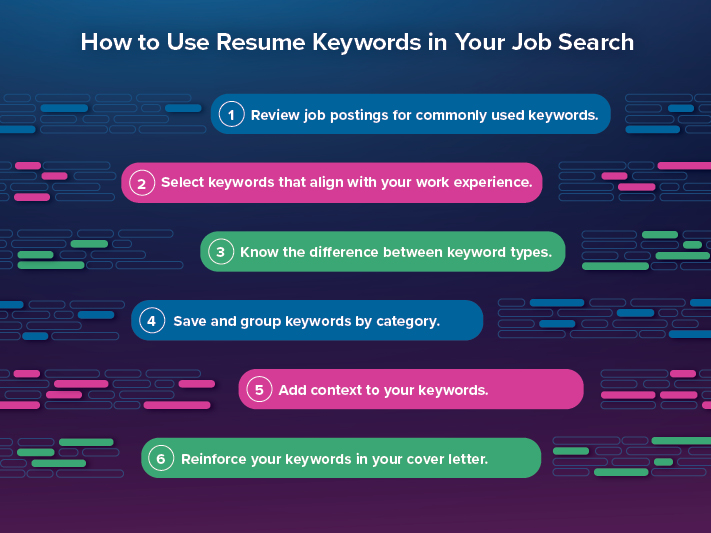
Para optimizar su currículum y su carta de presentación, lo primero es identificar las palabras clave que reflejen el puesto al que aspira y, a continuación, comprobar que se ajusten a su experiencia.
Consulte varias ofertas de empleo dentro de la misma profesión:
- Los puestos similares utilizan palabras clave similares en el currículum.
- Por ejemplo, las funciones de un coordinador de proyectos suelen incluir la «planificación», el «seguimiento del presupuesto» y la «comunicación con las partes interesadas».
- Estos patrones muestran cómo definen los empleadores el puesto.
Mantenga una lista actualizada de palabras clave:
- Guarde los términos de uso habitual en los distintos puestos de su ámbito profesional.
- Agrúpelas en categorías como «competencias técnicas» y «competencias interpersonales».
- Esto le permite ahorrar tiempo y garantiza la coherencia en toda su búsqueda de empleo.
Comprenda la diferencia entre los distintos tipos de palabras clave:
- Las competencias técnicas son habilidades técnicas y cuantificables, como «análisis de datos», «Excel» o «documentación de pacientes».
- Las competencias transversales describen el modo de actuar de un usted , como la «comunicación», la «colaboración en equipo» o la «resolución de problemas».
Compruebe las palabras clave antes de utilizarlas:
- Incluya únicamente palabras clave en su currículum que reflejen con precisión su experiencia.
- Utilice el mismo lenguaje que el de la descripción del puesto cuando este refleje fielmente su experiencia.
- Evite sustituir términos similares, ya que una formulación diferente podría interpretarse de forma distinta.
- Esté preparado para explicar cada palabra clave con un ejemplo concreto.
Utilice palabras clave en el currículum teniendo en cuenta el contexto:
- No enumere palabras clave sin indicar cómo se han aplicado.
- Asocie cada palabra clave a una acción o un resultado concreto.
- Ejemplo: «Analicé los datos de ventas mensuales para identificar tendencias y mejorar la precisión de las previsiones».
Esto ilustra el término clave «análisis de datos» al mostrar cómo se aplicó, en lugar de limitarse a mencionarlo.
Aproveche su carta de presentación para destacar las palabras clave:
- Seleccione uno o dos conceptos clave y explique cómo los aplicó « usted » en una situación concreta.
- Céntrese en por qué es importante la experiencia y en cómo se relaciona con el puesto.
- Utilice el mismo lenguaje que en su currículum, pero aporte detalles adicionales en lugar de repetirlo.
Unas palabras clave bien elegidas en el currículum mejoran su visibilidad, pero son la precisión y la claridad las que las hacen eficaces. Cuando su currículum pone de manifiesto sus competencias y su carta de presentación explica cómo se aplican al puesto, su candidatura resulta más clara y creíble durante la búsqueda de empleo.
Mejore la sección de formación de su currículum con Excelsior
La sección dedicada a su formación académica puede ir más allá de la mera mención de un título. Puede reforzar su experiencia destacando las asignaturas relevantes, las certificaciones y el aprendizaje aplicado que guardan relación con el puesto al que aspira.
Cuando se estructura de forma intencionada, esta sección refuerza las habilidades y los conocimientos que ya se han presentado a lo largo de su currículum. Por ejemplo, los cursos sobre análisis de datos, gestión de proyectos o sistemas sanitarios pueden reforzar la forma en que usted presenta su experiencia cuando esta está claramente vinculada a lo que usted ha realizado o está preparado para realizar.
Los programas de la Universidad de Excelsior, orientados a la carrera profesional, se han diseñado teniendo en cuenta su relevancia para el mercado laboral. Esto facilita que los « usted » puedan expresar lo que han aprendido en un lenguaje que se ajuste a las expectativas de las empresas.
Excelsior también ofrece recursos de preparación para la vida laboral con el fin de ayudar a los alumnos de usted a perfeccionar su currículum, mejorar su carta de presentación y abordar la búsqueda de empleo con una estrategia clara y bien definida.