
El futuro de la tecnología de la ingeniería mecánica
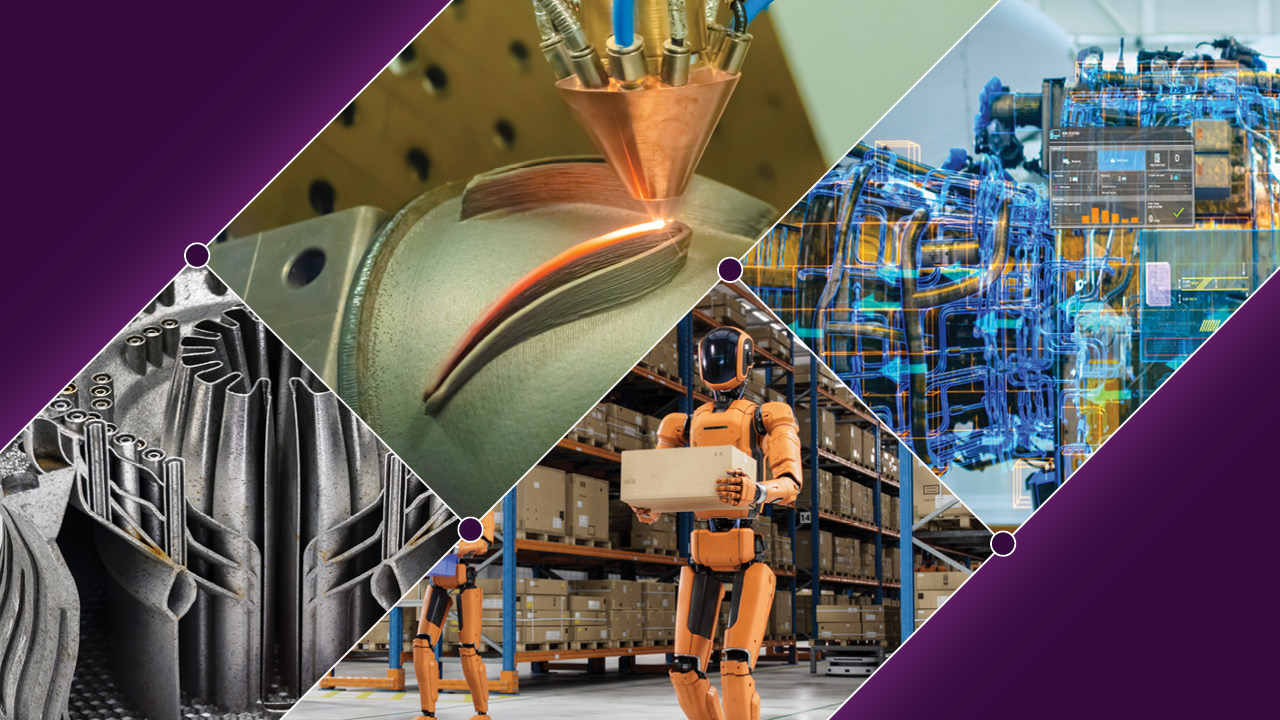
Desde las máquinas de vapor de la Revolución Industrial hasta los robots actuales, los ingenieros han encontrado continuamente nuevas formas de hacer que las máquinas funcionen mejor y sean más eficaces. Ahora, se trata de construir máquinas más inteligentes. La inteligencia artificial, la robótica, el Internet de las cosas, la fabricación aditiva y los gemelos digitales están cambiando la forma en que los ingenieros diseñan, prueban, construyen y mejoran los sistemas mecánicos. A medida que la tecnología de la ingeniería mecánica siga evolucionando, los ingenieros seguirán combinando los conocimientos técnicos tradicionales de la ingeniería con las tecnologías emergentes.
5 tecnologías de ingeniería mecánica que están marcando el futuro
La tecnología de la ingeniería mecánica está evolucionando a un ritmo vertiginoso, lo que aporta nuevas herramientas y posibilidades al proceso de ingeniería. Eche un vistazo a estas cinco tendencias que están transformando el sector.
Ingeniería Robótica y Automatización
Los ingenieros mecánicos colaboran cada vez más estrechamente con los ingenieros eléctricos y de software para desarrollar sistemas más conectados. La inteligencia artificial y el aprendizaje automático están haciendo que los robots sean más inteligentes y adaptables, lo que les permite reconocer su entorno, tomar decisiones y adaptarse a condiciones cambiantes. Los robots colaborativos, o «cobots», trabajan junto a las personas, encargándose de tareas repetitivas, extenuantes o peligrosas, al tiempo que mejoran la productividad y la seguridad en el lugar de trabajo. Además, se están desarrollando sistemas robóticos móviles y humanoides para su uso en almacenes, el sector sanitario, la inspección industrial y la respuesta ante catástrofes.

Fabricación aditiva (impresión 3D)
La fabricación aditiva (AM), o impresión 3D, está yendo más allá de la creación de prototipos y se está convirtiendo en una opción cada vez más habitual para el diseño. Los ingenieros pueden crear componentes complejos, ligeros y personalizados con mayor rapidez, al tiempo que reducen el desperdicio de material. Los avances en la impresión de metales, los materiales sostenibles y la fabricación híbrida —que combina la impresión 3D con el mecanizado CNC— están ampliando su uso en sectores como el aeroespacial, el automovilístico y el sanitario. La AM también está cambiando la forma en que los productos pasan del diseño a la producción. Los inventarios digitales permiten a las empresas almacenar diseños en la nube y producir piezas bajo demanda, más cerca de donde se necesitan.
Materiales avanzados y materiales inteligentes
Los nuevos materiales están ofreciendo a los ingenieros mecánicos más formas de crear productos más ligeros, resistentes, duraderos y eficientes. Los compuestos avanzados de fibra de carbono, los materiales inteligentes y los materiales autorreparables están ampliando las posibilidades en ámbitos que van desde la industria aeroespacial y la automoción hasta la sanidad y las energías renovables. La nanotecnología está llevando esto aún más lejos. Los nanomateriales, como el grafeno y los nanotubos de carbono, pueden mejorar la resistencia, la eficiencia, el almacenamiento de energía y la durabilidad, al tiempo que permiten diseños más eficientes.
Tecnologías de energía sostenible y renovable
La sostenibilidad está adquiriendo un papel cada vez más importante en la tecnología de la ingeniería mecánica, a medida que las industrias buscan formas de reducir los residuos, conservar los recursos y utilizar la energía de manera más eficiente. Los ingenieros están diseñando todo tipo de sistemas, desde sistemas de climatización de bajo consumo hasta sistemas de frenado regenerativo, teniendo siempre en cuenta el impacto medioambiental de los productos. Asimismo, están trabajando en el almacenamiento de energía, los vehículos eléctricos, la captura de carbono y las redes inteligentes.
La energía renovable es otro ámbito en expansión, en el que los ingenieros mecánicos se esfuerzan por mejorar la energía eólica, solar, hidroeléctrica, geotérmica y de hidrógeno. Por ejemplo, el hidrógeno puede producirse mediante procesos termoquímicos, electroquímicos, biológicos y fotocatalíticos, y puede transportarse como gas comprimido, en estado líquido o mediante portadores químicos. El hidrógeno puede utilizarse en la generación de electricidad, el transporte, los procesos industriales y el almacenamiento de energía. Por ejemplo, las pilas de combustible convierten el hidrógeno en electricidad, mientras que la combustión del hidrógeno proporciona calor y energía.
Gemelos digitales y diseño predictivo
La tecnología de gemelos digitales crea réplicas virtuales de componentes, sistemas y procesos físicos, lo que proporciona a los ingenieros mecánicos una herramienta muy eficaz para diseñar, probar y optimizar productos a lo largo de todo su ciclo de vida. Los ingenieros pueden utilizar los gemelos digitales para simular diseños, probar diferentes escenarios, identificar problemas de forma temprana y realizar mejoras antes de que se construya físicamente nada. Para los ingenieros mecánicos, los gemelos digitales se están convirtiendo en una herramienta importante para mejorar la fiabilidad, la eficiencia y la calidad de los productos.
Su futuro en la tecnología de ingeniería mecánica en Excelsior
El futuro de la tecnología de ingeniería mecánica lo están forjando ingenieros dispuestos a pensar de forma diferente, a adoptar nuevas tecnologías y a convertir las ideas en soluciones. Si ustedestá preparado para ser uno de ellos, el programa de Grado en Tecnología de Ingeniería Mecánica de la Universidad de Excelsior puede ayudarle usted a desarrollar las habilidades necesarias para convertir la innovación en acción. ustedAdquirirá conocimientos prácticos en áreas como el diseño asistido por ordenador, la robótica, la automatización, los materiales, la fabricación, el análisis de ingeniería y tecnologías emergentes como la inteligencia artificial y los gemelos digitales.
Además, usted no tendrá que afrontar sus estudios en solitario. Excelsior ofrece apoyo académico específico y recursos para ayudar a usted a mantener el rumbo, junto con recursos de preparación para la vida laboral que pueden ayudar a usted a explorar oportunidades de empleo y a reforzar sus habilidades profesionales.
La tecnología de ingeniería mecánica está en constante evolución, al igual que las oportunidades para dejar huella. Con las habilidades adecuadas, curiosidad y voluntad de innovar, el programa « usted » puede ayudarle a diseñar el futuro. Empiece a labrar su futuro como técnico en ingeniería mecánica con la Universidad de Excelsior.