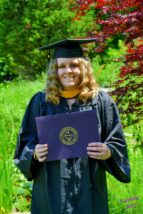
La enfermería no era precisamente lo primero en lo que pensaba Steven Corey cuando empezó a buscar una carrera profesional. No fue hasta que este nativo de Scotia (Nueva York) consiguió un puesto como técnico de atención al paciente en el Albany Medical Center en 2007 cuando se dio cuenta de que quería seguir en el ámbito de la asistencia sanitaria.
Un año más tarde, en 2008, obtuvo su título de técnico superior en enfermería en el Maria College. Tras unos años trabajando en enfermería de urgencias, Corey fue ascendido a coordinador de atención al paciente. Este nuevo puesto de liderazgo clínico conllevaba una gran responsabilidad, pero Corey estaba preparado para ello. «Me encantaba el trabajo. Ser líder en un departamento repleto de talento increíble me inspiraba», afirma.
Primera carrera profesional: Sector de la restauración
Lo que más me gusta de Excelsior: Interactuar con otros estudiantes en los foros de debate
Aficiones: La serie de televisión «The Walking Dead» y «Star Wars»
En 2013, Corey llevaba ya algún tiempo cubriendo turnos de noche en el Servicio de Urgencias y estaba listo para solicitar el puesto de subdirector de enfermería del turno de noche. Sin embargo, su candidatura fue rechazada por carecer de la formación necesaria. Entonces, Corey se enteró de la colaboración entre el Albany Medical Center y el Excelsior College y decidió dar el paso hacia la formación en línea para poder avanzar en su carrera. «El proceso de matriculación y de organización del horario de clases fue sorprendentemente sencillo. Así que me lancé de lleno. Excelsior ofrecía cursos de ocho semanas, lo que me permitió acelerar mis esfuerzos», afirma, y añade que la colaboración con su asesor académico de Excelsior y el equipo educativo del Albany Medical Center fue un proceso fluido.
«Y ya sea en materia presupuestaria, política o normativa, aprendo algo nuevo cada día». –Steven Corey
Corey no tardó mucho en familiarizarse con los cursos en línea de Excelsior. Menos de un año después de matricularse, Corey obtuvo la Licenciatura en Enfermería en 2014 y decidió cursar un máster en Excelsior. En 2017 obtuvo el Máster en Liderazgo en Enfermería y Administración de Sistemas Sanitarios y pronto se encontró encaminado hacia puestos de liderazgo en el ámbito de la enfermería.
Tras obtener un máster, Corey comenzó a trabajar como jefe de enfermería en la UCI médica y, según sus propias palabras, «se lo pasó en grande». Disfrutó de la relación con sus compañeros de trabajo y pasó algo menos de dos años adquiriendo experiencia como responsable y realizando tareas administrativas. En enero de 2019, el director de enfermería le pidió a Corey que regresara al Servicio de Urgencias para ocupar el cargo de vicepresidente adjunto interino de servicios de urgencias, traumatología y salud mental. Fue nombrado para el puesto en octubre de 2019.
Como vicepresidente adjunto, Corey tiene un trabajo exigente. Los problemas son de mayor envergadura, afirma, y señala que ocuparse de varias unidades diferentes, en lugar de solo una, complica las cosas. Pero eso es también lo que hace que todo resulte tan interesante. «[Un problema que surge] cambia un poco la forma de pensar, modifica ligeramente la estrategia y usted plantea el reto usted investigar y aprender cada día… Y ya sea en materia de presupuesto, de políticas o de normativa, aprendo algo nuevo cada día», afirma Corey. También señala que su trabajo implica un gran proceso de autodescubrimiento, y afirma que aprende sobre sí mismo y sus capacidades con cada nueva oportunidad.
Corey afirma que ocupar un puesto de liderazgo le ha permitido convertirse en un mejor mentor para el personal de enfermería y los responsables de enfermería. «Se trata de formar a la próxima generación de líderes y de impulsar a su equipo», afirma. Los cambios que se están produciendo en el sector sanitario hacen que sea un momento apasionante para formar parte de un equipo de enfermería, en el que hay que tomar decisiones sobre la marcha e intentar resolver problemas con los que no se había topado antes. «Es un lugar fantástico en el que estar», afirma Corey.
 «Manteniendo viva una tradición», de Len Tantillo, 2011, óleo sobre lienzo, colección del Excelsior College, 61 x 102 cm.
Con motivo del 40.º aniversario del Excelsior College en 2011, el presidente de la institución, John F. Ebersole, encargó al artista Len Tantillo la creación de una obra conmemorativa. El cuadro, titulado «Keeping a Tradition Alive» (Manteniendo viva una tradición), representa a educadores itinerantes del siglo XIX, un guiño histórico a la forma en que el Excelsior College ofrece oportunidades educativas a los estudiantes. La pintura rinde homenaje tanto a quienes persiguen el aprendizaje como a quienes imparten la educación. La investigación de Tantillo sobre el movimiento de los liceos, una de las primeras formas de educación organizada para adultos en los Estados Unidos, influyó en su concepto y le llevó a establecer una conexión directa con Excelsior como institución en línea. Cuando se le preguntó qué esperaba que la gente extrajera de su obra, Tantillo respondió: «La idea, en el nivel más básico, de que el deseo de aprender de las personas es universal y atemporal. Si el deseo es lo suficientemente fuerte, ustedencontrará tiempo para hacerlo».
Albany, Nueva York — Excelsior College está creando un ecosistema de aprendizaje para ofrecer itinerarios formativos fluidos a los estudiantes y conceder créditos universitarios por los programas de certificación. La División de Educación Continua de la Universidad de California en Irvine (UCI DCE) se ha asociado con Excelsior para ofrecer a los estudiantes que obtengan certificados acreditados la oportunidad de convertir dicho certificado profesional en créditos para un programa de titulación de Excelsior.
Además, gracias a esta colaboración, los estudiantes y antiguos alumnos de Excelsior tendrán la oportunidad de matricularse en los programas de certificación del DCE de la UCI para continuar con su aprendizaje permanente.
Excelsior College se fundó en 1971 como el «Regents External Degree Program», un programa que evaluaba los créditos obtenidos en cursos universitarios, exámenes de aptitud, programas educativos militares y la valoración de los conocimientos adquiridos a través de la experiencia y de enfoques educativos no tradicionales, con el fin de ayudar a los estudiantes a completar sus estudios. A pesar de su evolución hacia la oferta de programas de grado totalmente en línea, Excelsior ha mantenido su compromiso de convalidar créditos por los logros de aprendizaje previos y de otorgar créditos por la formación laboral y militar aprobada, las credenciales sanitarias y las certificaciones del sector.
«La colaboración entre Excelsior y la UCI DCE supone un cambio en la educación superior hacia un ecosistema educativo más amplio», afirmó David Schejbal, presidente de Excelsior College. «Esta colaboración permitirá a los estudiantes de ambas instituciones disfrutar de flexibilidad a la hora de personalizar la mejor experiencia de aprendizaje que se adapte a sus necesidades».
El UCI DCE se fundó en 1962 y desde entonces ha respondido a las necesidades de formación continua y desarrollo profesional de particulares y organizaciones. Ofrece más de 80 certificados y programas de estudios especializados adaptados a las necesidades del sector.
«La colaboración en materia de itinerarios de aprendizaje entre la División de Educación Continua de la Universidad de California en Irvine (UCI) y el Excelsior College es un magnífico ejemplo del tipo de cooperación interinstitucional que presagia una tendencia importante en la educación superior», afirmó Gary Matkin, decano de Educación Continua y vicerrector de Itinerarios Profesionales. «Basada en la necesidad de que los estudiantes dispongan de vías de acceso al aprendizaje que les aporten valor a lo largo de las transiciones de su vida, esta colaboración combina la solidez de los programas de certificados con créditos de la UCI y la larga tradición de innovación de Excelsior en programas de finalización de estudios. Los estudiantes pueden comenzar con un programa de la UCI y obtener créditos para un título de Excelsior, o bien comenzar con el título y complementarlo con un programa de certificado de la UCI. Como siempre, para ambas instituciones, los estudiantes son el centro de esta colaboración. Esperamos que esta colaboración sirva de modelo para otras instituciones a medida que la educación superior evoluciona para satisfacer las necesidades de los estudiantes».
Para obtener más información sobre esta colaboración, visite excelsior.edu/uci.
# # #
Contacto para los medios de comunicación: Excelsior College:
Erin Coufal, ecoufal@excelsior.edu, 518-608-8498
ACERCA DE EXCELSIOR COLLEGE
Excelsior College es una universidad en línea acreditada y sin ánimo de lucro dedicada a ayudar a los adultos a obtener sus títulos y a avanzar en sus carreras profesionales. La universidad contribuye al desarrollo de una sociedad diversa, formada y preparada para el mundo laboral, valorando el aprendizaje permanente y haciendo hincapié en atender a personas históricamente infrarrepresentadas en la educación superior. Fundada en 1971, Excelsior se adapta a las circunstancias de los estudiantes —tanto académicas como geográficas— eliminando los obstáculos que impiden alcanzar los objetivos educativos de los adultos que desean continuar su formación y completar sus estudios. Nuestros pilares son la innovación, la flexibilidad, la excelencia académica y la integridad.
El programa de prácticas virtuales dirige a Merideth Sweeney hacia el trabajo de sus sueños
En la primavera de 2020, Merideth Sweeney, estudiante del Excelsior College de Woodland Hills (California), comenzó unas prácticas virtuales en Posturedontics, una empresa de ergonomía dental especializada en terapias ergonómicas basadas en la evidencia para profesionales de la odontología. No podía imaginar que esas prácticas le abrirían las puertas a una nueva carrera profesional. A través de ellas, conoció al dentista Michael Goldberg, de Practice Perfect Systems, una consultora de gestión de consultas sanitarias con sede en California.
Cuando su periodo de prácticas a través de Excelsior llegó a su fin en noviembre de 2020, Goldberg le propuso a Sweeney que se incorporara a su empresa. Sweeney, antigua higienista dental, trabaja ahora con Goldberg en el departamento de marketing de la empresa, ayudando a las clínicas dentales a desarrollar y hacer crecer sus negocios. Se centra en el desarrollo y la comercialización de recursos a los que otras empresas puedan recurrir cuando tengan dudas sobre las clínicas dentales. «Estamos abordando todos los principales problemas dentales a los que se enfrentan los dentistas en la actualidad», afirma. «Seleccionamos aquellas soluciones en las que realmente creemos, que consideramos que serán de ayuda, para resolver los problemas a los que se enfrentan las clínicas dentales».
La Sra. Sweeney conoce bien el sector odontológico. Durante 20 años trabajó como higienista dental hasta que una lesión grave le impidió trabajar durante dos años. Fue entonces cuando decidió que era el momento de volver a estudiar para seguir un camino diferente con el que ganarse la vida. Regresó al Excelsior College, donde anteriormente había obtenido una licenciatura en Ciencias de la Salud, para cursar un máster en Administración Sanitaria. Está en camino de terminar el programa en febrero de 2021.
Los estudios y la experiencia de Sweeney en el Máster en Ciencias de la Administración Sanitaria de Excelsior encajan perfectamente con su puesto actual en Practice Perfect Systems. «Me gusta trabajar en marketing. Me fascina la psicología que subyace a la decisión de una persona a la hora de comprar un producto… Me gusta influir en las personas o inspirarlas para que crean en lo que yo creo», afirma, refiriéndose a su capacidad para ayudar a otras empresas a elegir el servicio que mejor se adapta a sus necesidades.
Hasta ahora, la Sra. Sweeney ha aplicado gran parte de lo que ha aprendido —en particular, los nuevos conocimientos sobre el coaching individual— en su puesto. Ya ha puesto a prueba algunos de sus conocimientos redactando contenidos para un manual de empleados en línea al que otras empresas del sector odontológico pueden recurrir en busca de respuestas a preguntas habituales sobre buenas prácticas. Y, a sugerencia de Goldberg, en enero de 2021, Sweeney comenzó un programa de liderazgo de tres a seis meses con John Maxwell, un popular e influyente experto en liderazgo. Sweeney afirma que espera obtener varios beneficios del programa: «sentirme más cómoda hablando ante grupos, ser capaz de comunicar mi mensaje con mayor facilidad, no sentirme tan intimidada y también aprender a delegar más».
Sweeney aconseja a los demás que, para conseguir un puesto de trabajo fuera del ámbito de la odontología clínica, es importante ampliar su formación en administración o marketing. Gracias a que Sweeney realizó unas prácticas virtuales mientras cursaba su máster en Excelsior, pudo ponerse en contacto con la empresa en la que acabaría encontrando el trabajo de sus sueños y ahora ayuda a otras empresas del sector dental a alcanzar el éxito.
Más de Merideth Sweeney:
¿Cuál es el mejor consejo empresarial usted recibido?
El mejor consejo empresarial que he recibido nunca es contratar al personal basándose, en primer lugar, en su actitud y, después, en sus habilidades y cualidades… La actitud y el comportamiento de un empleado son indicadores reveladores de su nivel de productividad, de su capacidad para trabajar en equipo y del respeto que siente por la organización. Es posible evaluar estas características contratando a los empleados con contratos de corta duración y asignándoles un proyecto que deban llevar a cabo.
¿Cuáles son las cualidades o habilidades más importantes que debe tener una persona para triunfar en su campo?
Algunas de las cualidades y habilidades esenciales para tener éxito en el sector de la consultoría son la curiosidad por aprender, la capacidad de ver el panorama general, la apertura mental para incorporar ideas empresariales e innovaciones procedentes de fuera del sector odontológico, y la capacidad de comunicarse de forma eficaz y establecer relaciones. Es necesario tener ganas de aprender y mejorar las propias habilidades, ya que el mundo empresarial cambia a diario y la capacidad de dar un giro y adaptarse es fundamental.
¿Cuál es el mejor libro, podcast o boletín electrónico relacionado con su sector?
El boletín electrónico «Dentistry’s Morning Briefing», publicado por la revista Dentistry IQ, ofrece un resumen diario de contenidos de actualidad relacionados con el sector odontológico, así como enlaces a publicaciones y artículos informativos. El ámbito de consultoría de Practice Perfect Systems se centra en la medicina dental del sueño, por lo que el podcast de Jamison Spencer, DMD, MS, titulado «The Airway, Sleep & TMD» resulta muy oportuno y relevante.
Albany, Nueva York — En 2011, el entonces rector del Excelsior College, John Ebersole, encargó a Len Tantillo la creación de una obra histórica en honor al 40.º aniversario de la universidad. Ahora, diez años después, Excelsior celebra su 50.º aniversario y la pintura se encuentra cedida al Instituto de Historia y Arte de Albany como parte de la exposición «A Sense of Time: The Historical Art of L.F. Tantillo».
El cuadro de Tantillo, «Keeping a Tradition Alive» (Manteniendo viva una tradición), vincula el actual modelo de enseñanza a distancia de Excelsior con los esfuerzos educativos de los liceos estadounidenses del siglo XIX. En la obra se representa esta forma primitiva de educación para adultos, y las linternas de la escena simbolizan la luz del conocimiento. Los personajes del cuadro representan a los predecesores de los estudiantes de Excelsior. Adultos de todas las edades y procedencias acudían a aprender de los destacados profesores del movimiento de los liceos, al igual que los estudiantes de todos los orígenes encuentran la luz y la educación en Excelsior College.
«La idea de una universidad sin paredes no dejaba de resonar en mi mente. Una educación que no estuviera ligada a un lugar concreto fue mi fuente de inspiración para el cuadro», afirmó el artista Len Tantillo.
A mediados y finales del siglo XIX, ante la falta de campus y aulas, las clases se impartían en cualquier lugar disponible, ya fuera al aire libre o en el interior. Lo importante era el aprendizaje. El cuadro «Manteniendo viva una tradición» rinde homenaje a la dedicación de unos profesores muy motivados y al espíritu indomable de unos alumnos adultos dispuestos a sacrificar su tiempo libre en pos del conocimiento.
«Excelsior College se enorgullece de contar con este cuadro de Tantillo como parte de su historia, especialmente ahora que la institución celebra su 50.º aniversario», declaró David Schejbal, presidente de Excelsior College. «El Albany Institute of History & Art ha organizado una prolífica exposición de la obra de Tantillo, y Excelsior se complace en compartir este cuadro con el museo y el público».
La exposición «A Sense of Time: The Historical Art of L.F. Tantillo» puede visitarse en el Instituto de Historia y Arte de Albany hasta el 25 de julio.
«El Instituto de Historia y Arte de Albany se complace enormemente en acoger esta retrospectiva de 40 años de la obra de Len», afirma Tammis Groft, directora ejecutiva del Instituto de Historia y Arte de Albany. «Len Tantillo es uno de los pintores más destacados de temas históricos y paisajes marinos de nuestro tiempo. Es reconocido por su capacidad para capturar momentos concretos y visualizar lugares del pasado a través de sus pinturas, y los visitantes han quedado impresionados por el alcance y la envergadura de su obra».
Vea a Len Tantillo hablar más sobre su trabajo.
###
Contacto para los medios de comunicación: Excelsior College:
Erin Coufal, ecoufal@excelsior.edu, 518-608-8498
ACERCA DE EXCELSIOR COLLEGE
Excelsior College es una universidad en línea acreditada y sin ánimo de lucro dedicada a ayudar a los adultos a obtener sus títulos y a avanzar en sus carreras profesionales. La universidad contribuye al desarrollo de una sociedad diversa, formada y preparada para el mundo laboral, valorando el aprendizaje permanente y haciendo hincapié en atender a personas históricamente infrarrepresentadas en la educación superior. Fundada en 1971, Excelsior se adapta a las circunstancias de los estudiantes —tanto académicas como geográficas— eliminando los obstáculos que impiden alcanzar los objetivos educativos de los adultos que desean continuar su formación y completar sus estudios. Nuestros pilares son la innovación, la flexibilidad, la excelencia académica y la integridad.
Katheryn Soons utiliza tres títulos de enfermería para destacar en su carrera de ayuda a los demás.
Katheryn Soons ha estado vinculada al sector sanitario toda su vida. En el instituto, trabajó en la consulta de oftalmología y en el centro quirúrgico de su padre, y en la universidad fue voluntaria en el cuerpo de bomberos y rescate. Era lógico que se dedicara profesionalmente al sector sanitario, y durante los últimos 29 años ha desempeñado diversas funciones en el Centro Médico de la Universidad de Vermont. Durante ese tiempo, ha obtenido un título de grado asociado y una licenciatura en enfermería por el Excelsior College. En diciembre de 2020 completó un máster en formación en enfermería.
Soons, la mayor de seis hermanas en una familia católica irlandesa, recibió el apoyo para «salir al mundo». Le inquietaba la idea de marcharse de casa, pero su padre le sugirió que asistiera a la misma escuela a la que él había ido, el Saint Michael’s College. Esa decisión la encaminó hacia una trayectoria vital dedicada a ayudar a los demás. A los 19 años, se incorporó al cuerpo de bomberos y rescate del Saint Michael’s College, donde se formó como técnico de emergencias médicas (EMT) avanzado, cargo que ha desempeñado durante 32 años. También comenzó a trabajar en el centro de control de intoxicaciones de la sala de urgencias del Centro Médico de la Universidad de Vermont. Su objetivo era convertirse en enfermera de urgencias, pero necesitaba más formación para ello. Soons y un grupo de compañeros de trabajo oyeron hablar de los programas en línea de Excelsior y decidieron que era la mejor oportunidad para obtener su título de enfermera titulada.
El Centro Médico de la Universidad de Vermont es también socio corporativo de Excelsior, lo cual influyó en la decisión inicial de Soons de matricularse. Al referirse al descuento en la matrícula que le ofrece su empleo en el Centro Médico, afirma: «Es un gran alivio». Siguió beneficiándose del descuento en la matrícula mientras cursaba el máster, pero señala que, dado que trabaja a tiempo parcial, no recibe el reembolso completo. Para compensarlo, solicitó y le fue concedida una beca de enfermería de cuidados intensivos que rinde homenaje a la vida de un antiguo paciente de la UCI.
Tras obtener su título de técnico superior en enfermería en 2008, Soons comenzó a trabajar como enfermera en la UCI quirúrgica del Centro Médico de la Universidad de Vermont. Era un puesto que encajaba bien con su personalidad, pero, aunque se sentía a gusto en la UCI, decidió volver a estudiar para obtener su licenciatura, título que consiguió en junio de 2019. Además, fue el momento perfecto, ya que el hospital estaba iniciando el proceso para obtener la acreditación Magnet y animaba a todo el personal de enfermería a alcanzar el nivel de licenciatura.
Ahora, Soons va por buen camino para obtener su máster en formación en enfermería a finales de 2020. «Está muy claro lo que usted hacer para sacar una buena nota», afirma Soons, «tengo una rutina con Excelsior. Puedo planificar mi semestre y decirme que esta semana tengo que empezar a preparar ese trabajo que hay que entregar al final del semestre». Soons afirma que el trabajo del curso ha sido riguroso, pero que los profesores son accesibles y le brindan apoyo si alguna vez tiene alguna duda o si necesita un día más. Afirma: «Reconocen que muchos de nosotros trabajamos mientras estudiamos y, si usted ustedrazonable y usted : “esto es lo que puedo hacer, esto es lo que he hecho hasta ahora”, se han mostrado muy amables y comprensivos».
Los foros de debate han sido uno de los aspectos más destacados de la experiencia de Soons en Excelsior. Habiendo trabajado y pasado toda su vida adulta en Vermont, Soons admite que tiene una forma de pensar bastante cerrada, por lo que valora mucho las amplias visiones y perspectivas personales de las personas con las que entra en contacto durante sus cursos. «Cuando estoy en el foro de debate, me relaciono con personas de todo el mundo», afirma, «por lo que ha sido fantástico conocer tantos tipos diferentes de enfermería. Y considero que eso realmente ha enriquecido mi experiencia educativa».
Soons trabaja a tiempo parcial en el equipo de respuesta a emergencias clínicas y como interina en la UCI quirúrgica de adultos y pediátrica del Centro Médico de la Universidad de Vermont, lo que requiere conocimientos de enfermería para todas las edades. Trabaja dos turnos de 12 horas a la semana y, dado que el horario puede resultar exigente tanto física como mentalmente, ha desarrollado un sistema de autocuidado. Soons suele levantarse temprano para nadar y mantener la espalda y el cerebro sanos, según cuenta, y solo toma una taza de café por turno. Los viernes los dedica exclusivamente a su nieto, y los domingos, el lunes por la noche y el martes por la noche los reserva para hacer los deberes.
El sueño de la Sra. Soons es dedicarse a la docencia. De hecho, ya ha dado sus primeros pasos en este ámbito, ya que impartió formación en primeros auxilios como profesora adjunta durante cinco años y, desde 1991, como profesora interina en la Universidad de Vermont. Sabe que el máster en enfermería de Excelsior le ayudará a convertirse en una mejor docente y ya está tanteando el terreno para un nuevo puesto docente. Afirma que debe a sus títulos haber llegado tan lejos y añade que se ha convertido en una mejor enfermera gracias a lo que ha aprendido. «Hay cosas que he aprendido en los últimos tres años en el programa de grado en enfermería que no se incluían en el programa de técnico superior, y estas son las cosas que creo que me hacen ser mejor enfermera: cosas como la investigación, la calidad, la teoría... cosas ante las que usted ponga los ojos en blanco, pero que tienen su importancia».
usted en el lugar adecuado; usted sabe lo que puede suceder», aconseja Phyllis Wilson. Y esta tres veces graduada de Excelsior puede respaldar con toda razón esta afirmación. Actualmente presidenta del Memorial de las Mujeres Militares en Arlington (Virginia), la suboficial mayor 5 retirada Wilson cuenta con una impresionante carrera militar de 37 años, siete títulos universitarios, una titulación como enfermera colegiada, ocho hijos y doce nietos.
Con el objetivo de convertirse en médica, Wilson comenzó sus estudios universitarios en un centro de formación profesional local tras terminar el instituto, siendo la primera de su familia en cursar estudios superiores. Sin embargo, debido a sus limitados recursos económicos, solo podía permitirse matricularse en una o dos asignaturas a la vez. «Me di cuenta de que llevaba dos años y medio en ello y ni siquiera había terminado el primer curso universitario, y pensé: “Esto va a llevar una eternidad; tiene que haber una forma mejor de hacerlo”», recuerda. Y, como si fuera cosa del destino, pasó por delante de una oficina de reclutamiento del Ejército que promocionaba ayudas para la matrícula universitaria.
Wilson se alistó con la intención de cumplir un período de servicio de cuatro años, pero descubrió que la vida militar le llenaba. «Había algo en el ejército que encajaba perfectamente conmigo», explica. «Me encanta el trabajo en equipo y los viajes: las vistas, los paisajes, los sonidos y la gastronomía increíbles a los que probablemente nunca habría tenido acceso si no hubiera levantado la mano derecha y dicho que estaba dispuesta a alistarme en el ejército».
Comenzó su carrera en el Ejército como operadora de interceptación de comunicaciones de voz y lingüista de alemán en el Servicio de Inteligencia Militar. Durante su servicio activo y en la reserva, desempeñó funciones que abarcaban desde el ámbito táctico hasta el estratégico, con destinos en Alemania, Irak y Estados Unidos. Fue movilizada para apoyar la Operación Escudo del Desierto y la Operación Tormenta del Desierto, y prestó servicio como responsable de recopilación de inteligencia de señales para el XVIII Cuerpo Aerotransportado, en Fort Bragg, Carolina del Norte. Wilson también colaboró en la Operación Libertad Duradera como analista sénior de lucha contra el terrorismo y fue desplegada en dos ocasiones en Irak con una Fuerza Operativa Conjunta de Operaciones Especiales altamente especializada, cuyo objetivo era la captura de Osama Bin Laden.
Las ayudas militares para la matrícula le permitieron iniciar su trayectoria académica, cubriendo los costes de tres de sus titulaciones. Obtuvo la primera, un título de grado asociado, mientras vivía en Alemania. Obtuvo un certificado de enfermera práctica licenciada (LPN) en Estados Unidos con el objetivo de reunirse con su marido en Alemania y trabajar en el hospital militar local. Cuando eso no salió según lo previsto, aceptó un puesto en una cooperativa de crédito, que también ofrecía ayudas para la matrícula. Ella señala: «La vida usted lanza bolas usted , y ustedque aprender a batearlas».
Y Wilson se toma con pragmatismo esos giros inesperados de su vida. «Prefiero haber fracasado al intentar hacer algo antes que arrepentirme de no haberlo intentado nunca. Porque cuando sea mucho mayor, no quiero arrepentirme de no haberlo intentado siquiera».
El fracaso no era una opción cuando Wilson asistió a la escuela de paracaidistas del Ejército. «No iba a volver a una unidad de paracaidistas sin esas alas», afirma al referirse a la obtención de su insignia de paracaidista.usted la manera de salir adelante. Es realmente una cuestión mental. El cuerpo es capaz de hacer muchas cosas por usted, pero a veces usted usted . Sin embargo, si la mente usted dice usted usted , usted !»
Ahora, como directora del Monumento Conmemorativo a las Mujeres Militares —el único monumento nacional de gran envergadura del país dedicado a honrar a todas las mujeres que han defendido la nación desde la Guerra de la Independencia hasta la actualidad—, la Sra. Wilson continúa su servicio en el ámbito civil. «Todo lo que he hecho en el ejército, siguiendo el camino que Dios me ha marcado, me ha preparado para hacer exactamente lo que estoy haciendo aquí [en el Monumento]. ¡Me encanta este trabajo!».
Un incidente en un aparcamiento es otro ejemplo de cómo se encontró en el lugar adecuado, algo que llevó a la Sra. Wilson a presentar su candidatura para el puesto en el Monumento Conmemorativo de las Mujeres Militares. «No quería que me relacionaran con nada relacionado con las mujeres militares», explica. «Yo era soldado, no una mujer soldado». Pero tras enfrentarse a un hombre que cuestionó su derecho a utilizar una plaza de aparcamiento para veteranos especialmente señalizada, se replanteó la oportunidad. Él le preguntó a Wilson si su marido estaba con ella, asumiendo erróneamente que solo un hombre podía ser veterano. Mordiéndose la lengua, esta miembro del Salón de la Fama de la Fundación de Mujeres del Ejército le explicó con calma que, efectivamente, tenía derecho a utilizar esa plaza. Explica: «Por Dios, ¿cuántas mujeres más tienen que vestir el uniforme para servir a este país antes de que se las reconozca? Situaciones como esta también les ocurren a otras mujeres y alguien tiene que defenderlas. ¿Por qué no yo?».
Wilson obtuvo su séptimo título universitario —el tercero en Excelsior— en junio de 2021. Aprovechó el proyecto final de su Máster en Administración Pública para analizar la estructura organizativa del Memorial. A lo largo de sus estudios en Excelsior, donde obtuvo una Licenciatura en Estudios Liberales en 1988 y una Licenciatura en Enfermería en 2010, disfrutó del enfoque flexible de la universidad respecto al aprendizaje y de su experiencia en el ámbito militar. Basándose en su experiencia personal en otras universidades, señala: «No había muchas universidades que fueran ni de lejos tan útiles como Excelsior a la hora de encontrar esos créditos adicionales». La universidad, afirma, es una opción ideal para los estudiantes militares. «Lo entienden, saben cómo es una guía ACE, saben qué es un expediente académico conjunto de las Fuerzas Armadas y pueden usted el máximo número de créditos», explica.
Como estudiante recién graduada que está cursando su segundo máster, destaca el acceso a una biblioteca de primer nivel y la colaboración con sus compañeros como aspectos más destacados de su experiencia. Al señalar la importancia de la superación personal, afirma: «La educación superior es una forma estupenda de demostrar que ustedesfuerza por ser el mejor empleado posible, tanto si se lleva uniforme como si no». Obtenga más información sobre los títulos de Humanidades de Excelsior College.
El artista combina tecnología, investigación y talento para crear una obra de proporciones históricas
El artista Len Tantillo utilizó técnicas digitales para preparar el escenario de su pintura. Se utilizó un modelo digital de uno de los personajes (que se muestra en el monitor de la derecha) para ayudar a dar vida al personaje pintado final (tal y como se aprecia en el detalle que se muestra en el monitor de la izquierda). Foto: Mike Hemberger
Este artículo se publicó originalmente en la revista Live & Learn, vol. 14, n.º 1, en 2011.
Al combinarla tecnología actual con las técnicas artísticas tradicionales, el artista Len Tantillo da vida a la historia en sus numerosas pinturas. Al igual que el Excelsior College utiliza la tecnología para ofrecer oportunidades educativas a los estudiantes, Tantillo ha incorporado el modelado digital junto con las técnicas de pintura convencionales para ofrecer representaciones muy detalladas del pasado.
En 2011, el presidente de Excelsior, John Ebersole, encargó a Tantillo la creación de una obra histórica en honor al 40.º aniversario de la universidad. El artista, ampliamente conocido por su minuciosa investigación para crear obras históricas de gran perspicacia, se enfrentó a un gran reto con esta tarea. Al fin y al cabo, cuarenta años no es tanto tiempo en términos históricos, y Excelsior no cuenta en su campus con majestuosos edificios de ladrillo cubiertos de hiedra que pudieran servir de telón de fondo artístico evidente. Tantillo explicó el dilema: «Excelsior no es un lugar. Excelsior es una idea. Entonces, ¿cómo usted una idea?».
«Esa idea de una universidad sin paredes no dejaba de resonar en mi cabeza. usted , la educación, pero no en un lugar concreto» –Len Tantillo
Como investigador experto, Tantillo partió de su propio instinto y su imaginación. Sus primeras ideas giraban en torno a los profesionales itinerantes y los médicos que realizaban visitas a domicilio. Pensó: «Me pregunto cuántos servicios más como ese podría haber habido». Una vez plantada la semilla, comenzó su investigación. «Esa idea de una universidad sin paredes no dejaba de resonar en mi cabeza. usted , educación, pero no en un lugar concreto», recordó.
Dos movimientos dan lugar a una idea
Su investigación comenzó de forma sencilla, con palabras clave como «educación», «historia» y «escuela nocturna», y dio a luz resultados que ayudaron a perfilar el concepto del que surgió la obra *Keeping a Tradition Alive*. Tantillo descubrió dos iniciativas educativas —el American Lyceum y el Movimiento Chautauqua— que ponían de manifiesto las raíces de la educación no tradicional, antecesoras históricas de la idea innovadora que dio origen al Excelsior College.
Al igual que Excelsior lleva la educación a los alumnos, en lugar de que estos acudan a un aula física, el Movimiento de los Liceos Estadounidenses contaba con educadores itinerantes. Josiah Holbrook, graduado de Yale, fundó el movimiento a mediados de la década de 1820, viajando por todo el este de los Estados Unidos para promover el concepto de la educación para estudiantes adultos. Inicialmente dirigidos a los agricultores, los liceos se habían convertido, hacia la década de 1840, en instituciones más profesionales con conferencias de intelectuales famosos como Ralph Waldo Emerson, Frederick Douglass, Henry David Thoreau, Daniel Webster, Nathaniel Hawthorne y Susan B. Anthony.
Tantillo recordó haber compartido su idea con el presidente Ebersole. «Empezamos a hablar de esta idea del American Lyceum y hice un boceto allí mismo» (que se muestra a continuación). El artista imaginó a un pequeño y diverso grupo de personas, reunidas en un maizal por la noche, tras haber terminado su jornada laboral, muy parecidas a los adultos trabajadores que conforman el perfil medio de los alumnos de Excelsior. «Era esta idea de la noche, la luz resplandeciente y personas comprometidas participando en algún tipo de evento educativo», añadió.
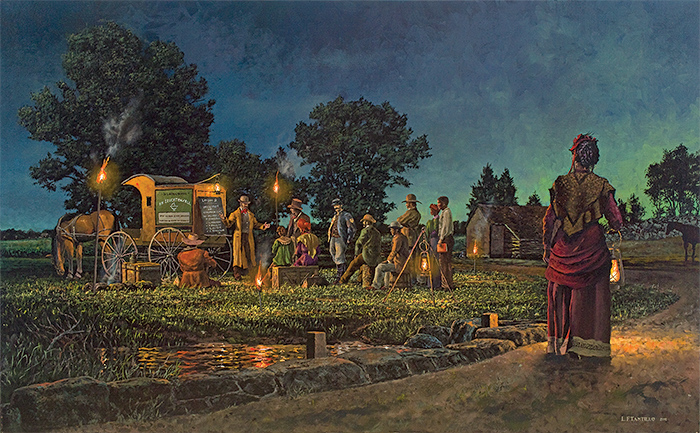
«Manteniendo viva una tradición», de Len Tantillo, 2011, óleo sobre lienzo, colección del Excelsior College, 61 x 102 cm.
Los liceos prosperaron hasta el estallido de la Guerra Civil. Tras la guerra, se integraron en el Movimiento Chautauqua del estado de Nueva York de la década de 1870. La Asamblea de la Escuela Dominical del Lago Chautauqua, en el oeste de Nueva York, fundada en 1874 por John H. Vincent y Lewis Miller, comenzó como un programa para la formación de maestros de escuela dominical y colaboradores de la iglesia. Al principio, de carácter totalmente religioso y celebrado al aire libre, el programa se amplió gradualmente para incluir educación general, actividades recreativas, aprendizaje permanente y entretenimiento popular. En años posteriores, las conferencias y clases de verano se complementaron con un curso no confesional, de duración anual, que consistía en lecturas dirigidas en casa y estudios por correspondencia.
Todo está listo: comienza el modelado
Una vez definido el concepto de la obra, Tantillo estaba listo para planificar el alcance de la misma. Licenciado en Arquitectura por la Escuela de Diseño de Rhode Island, comenzó su carrera como diseñador arquitectónico y más tarde trabajó como ilustrador arquitectónico autónomo. Un encargo para representar una serie de estructuras del siglo XIX a partir de hallazgos arqueológicos y documentos históricos en 1980 supuso el inicio de su carrera en la pintura histórica, y en 1984 abandonó por completo el arte comercial para dedicarse a tiempo completo a las bellas artes. Sin embargo, su formación en arquitectura le sirve de base sobre la que construir su arte, ya que a menudo crea maquetas como referencia. Cuando su obra representa acontecimientos anteriores a la fotografía, estas maquetas le proporcionan un medio para recrear la historia basándose en su investigación.
Sus primeros modelos estructurales estaban hechos de cartón, papel y tela, y a menudo también utilizaba modelos humanos. Encontrar el vestuario adecuado para sus personajes podía resultar complicado, lo que a veces le obligaba a coser él mismo los trajes, fruto de una meticulosa investigación. Sin embargo, hace unos diez años, incorporó el modelado por ordenador a su arsenal artístico. Gracias a los programas de modelado y gráficos 3D Rhino y Maya, puede crear no solo el escenario de una obra, sino también a los personajes y su vestimenta. «El ordenador me permite tomar una forma humana, manipular los rasgos faciales, crear peinados y vestimentas», describió.
La obra encargada por Excelsior le llevó a Tantillo aproximadamente cinco meses, y dedicó gran parte de ese tiempo a perfeccionar el modelo generado por ordenador. «Es una herramienta tremendamente potente», afirmó refiriéndose al software. «Me permite llegar a lugares a los que nunca antes había podido llegar. Los temas eran sencillamente demasiado complejos. Pero ahora que cuento con estas habilidades para realizar el modelado digital, mis horizontes se han ampliado enormemente». Una vez finalizado el trabajo digital, Tantillo pudo comenzar el proceso de plasmar el pincel sobre el lienzo, combinando tecnología y tradición para crear una obra atemporal de belleza artística y relevancia histórica.
El cuadro: una idea toma forma
La pintura refleja tanto las raíces rurales de la educación de adultos en Estados Unidos como el espíritu de los educadores, extraordinariamente comprometidos, que viajaban de comunidad en comunidad para compartir sus conocimientos.
Esta representación de las primeras escuelas nocturnas muestra cómo se impartía la enseñanza a adultos que trabajaban. Las numerosas linternas que aparecen en la escena simbolizan la llama o la luz del conocimiento, así como la promesa inherente a la educación de sacar a los alumnos de la oscuridad y llevarlos hacia la luz. Las personas representadas en este cuadro son los antecesores de los estudiantes actuales de Excelsior: adultos de todas las edades, veteranos y militares en activo, minorías étnicas, hombres y mujeres y, sobre todo, una enfermera que, con su linterna, evoca la imagen de Florence Nightingale. Dado que Excelsior College cuenta con el programa de enfermería más grande del país, resulta apropiado que ella ocupe un lugar destacado en primer plano.
Un baúl con el nombre «R.E. Bennett» grabado en un lateral descansa en el suelo, junto a la carreta del instructor (detalle más abajo). Tantillo añadió este detalle en homenaje a un educador que contribuyó a despertar su interés por la historia. «Robert Bennett fue mi profesor de historia favorito, mi profesor favorito de todos los tiempos», explicó. El entusiasmo de Bennett por la historia causó una profunda impresión en el artista. Añadió: «Cuando usted en su clase, usted qué iba a tratar la lección, pero usted iba a ser emocionante e interesante. Y él siempre usted hacía usted en ello; intentaba usted al mundo de aquella época».
La obra «Keeping a Tradition Alive» (Mantener viva una tradición) ilustra las lecciones aprendidas de una época en la que la educación formal para adultos en Estados Unidos se encontraba en sus inicios. El testigo ha pasado del movimiento del American Lyceum al Excelsior College y otras instituciones. Ahora que el centro celebra cuatro décadas ofreciendo oportunidades educativas a adultos que trabajan, es importante no olvidar a quienes abrieron el camino y, gracias a la visión artística de Len Tantillo, esto siempre será recordado. ¿Qué espera Tantillo que la gente extraiga de esta obra? «La idea, en el nivel más básico, de que el deseo de aprender de las personas es universal y atemporal. Si el deseo es lo suficientemente fuerte, ustedencontrará tiempo para hacerlo».