

Bachelor of Science in Psychology
Bachelor of Science in Psychology
113 Credits

Talk with us.
Learn more about how our program works
and what you need to get started
Talk with us.
Ask questions, learn more, and find out if Excelsior is right for you.
Create a Career That Makes a Difference with a BS in Psychology
If you are curious how the human mind works and have a passion for helping others live, work, and feel their best, Excelsior University’s Bachelor of Science in Psychology could be your perfect fit.
Build a strong foundation in general psychology principles and then delve deeper into human development, cognition and learning, memory, intelligence, personality theories, psychological disorders, and more.
You’ll learn with inclusive, engaging courses and personalized instruction so you can be ready to take the next step toward higher education and a clinical or counseling career. Or use your psychology degree to thrive in fields as diverse as law, marketing, and education.
Dedicated Support
Here for you from start to finish
200,000+ Alumni
Join our global network
Start October 26
Courses start every 8 weeks
PROGRAM DETAILS
BS in Psychology
- General Education30 Credits
- Major Core45 Credits
- University1 Credits
- Electives44 Credits
- Transfer Credits113 Credits
Bachelor of Science in Psychology
- Year 1 - Term 1
-
The future: the only constant is change. The only certainty is uncertainty. So how do you prepare today for what might come tomorrow? In this introductory, interdisciplinary course unique to Excelsior University, you will learn through questions, not answers. You will challenge your prior assumptions, open your mind, and consider society s future dilemmas, progress, and crises. You will plan and question your own future your educational path, career trajectories, personal interests, ambitions, and mindsets. And you will build the foundational skills and flexibility of mind research and writing, critical thinking, argumentative reasoning, metacognition, and self-regulation to help you navigate the uncertainty and change of our future societies, workplaces, and selves. Note: This course must be completed with a grade of C or higher. Registration in this course is restricted to incoming students with fewer than 60 transfer credits. This course duplicates IND301 and CCS120. Credit for only one of these courses will be applied toward graduation. The Cornerstone cannot be completed in the same term as a Capstone course.Prerequisites
NoneCredit Hours
3University Requirement -
Information literacy is the ability to find, evaluate, interpret, and use information legally, ethically, and effectively. This course provides a broad overview of information literacy concepts, including the differences between academic and popular research methods, finding and evaluating sources, reading sources critically, writing with sources, and safely navigating information networks such as the internet. Students must complete information literacy within their first 13 credits at Excelsior.Prerequisites
NoneCredit Hours
1Zero Textbook CostUniversity Requirement - Year 1 - Term 2
-
In this course, you'll apply psychological principles and theory to your everyday life. In addition to foundational topics like psychology as a science, learning and memory, human development, and consciousness, you will learn about some more specific topics like stress and health, psychological disorders and therapy, and human sexuality. Concepts learned in this course can be applied in any career to better understand behavior, thought, and emotion. Note: This course uses lower cost interactive courseware instead of textbooks.Prerequisites
NoneCredit Hours
3Major Requirement -
This class provides students with foundational knowledge and skills to prepare them for academic and professional writing. By analyzing the work of other writers, students will learn to approach writing from a rhetorical and genre-based perspective. They will practice sentence- and paragraph-level writing, learning to revise and correct their own work. They will also work on finding, documenting, and effectively integrating sources into a research-based essay. Both traditional (textual) and multimodal (textual and visual) composition will be addressed.Prerequisites
NoneCredit Hours
3Zero Textbook CostAlternative Courses AvailableGeneral Education: Written English I - Year 1 - Term 3
-
This course helps students to develop their skill as public speakers and oral communicators. Designed to provide students with a supportive environment where they can overcome the anxiety they may feel about public speaking, the class emphasizes techniques and practices for effective speech construction and delivery. Students will also develop critical thinking and listening skills. Students taking this course will need access to recording equipment for the purpose of creating podcasts, voiced-over PowerPoint presentations and videotaped speeches.Prerequisites
NoneCredit Hours
3Zero Textbook CostAlternative Courses AvailableGeneral Education: Humanities -
The purpose of this course is to give the student an overview of current and emerging trends in science and technology so that s/he will be able to make informed decisions and be an informed consumer. The course will introduce the scientific method and terminology used in reporting scientific results. A survey of current topical science issues will be covered as examples. This course will also prepare the student to read accounts about scientific, technological, and medical advances in the press and assess the scientific conclusions presented.Prerequisites
NoneCredit Hours
3Zero Textbook CostAlternative Courses AvailableGeneral Education: Natural Science - Year 1 - Term 4
-
The goal of this course is to help students develop mathematical reasoning and problem solving skills that will serve them well in their lives both in and out of school. Topics will include the important real-world applications of measurement units, managing money, statistics in the media, the mathematics of voting, and mathematics in the arts and nature. Providing correct solutions to routine problems is not the goal; more important is the ability to communicate effectively about mathematical reasoning and to solve realistic, practical problems both collaboratively with other students and individually. This is a survey course introducing the student to a variety of mathematical topics. It does not prepare a student for future courses that require a knowledge of algebra (e.g. PreCalculus or Statistics).Prerequisites
NoneCredit Hours
3Alternative Courses AvailableGeneral Education: Math -
This course introduces the science of lifespan development and the concept of human growth as being a product of the interaction among the biology, psychology, and environment of the individual. This course examines the physical, cognitive, psychosocial, and environment factors across the lifespan. Students will explore, analyze, and present theories and evidence associated with developmental science from conception through death. Concepts learned in this course can be applied to any career focusing on health or human services and can help learners raise healthier children and live in more functional families.Prerequisites
NoneCredit Hours
3Major Requirement - Year 1 - Term 5
-
This course offers an introduction to the major concepts, theoretical perspectives, research methods, and scholarship in sociology. Sociology is the scientific study of human social behavior, and this course examines several important sociological topics, including: culture; socialization; deviance; social inequality; social institutions; and social change. This course also explores various socio-historical and socio-cultural frameworks across the world, promoting an appreciation for unique cultural identities and institutions. Students will improve their analysis, understanding and interpretation of contemporary social issues in this rapidly changing world. This course encourages the practice of "doing" sociology through exploration of students' everyday social world, and the often invisible and taken-for-granted social forces that shape it.Prerequisites
NoneCredit Hours
3Zero Textbook CostAlternative Courses AvailableGeneral Education: Social Science & History -
In this interdisciplinary course, students will develop the analytical skills necessary to examine ethical issues in the workplace. Students explore conventional ethical theories and principles, develop ethical decision-making, and resolve common dilemmas. Students discuss the multiple challenges faced by professionals and identify ethical practices or codes that apply to each of their own professions.Prerequisites
NoneCredit Hours
3Zero Textbook CostGeneral Education: Ethics - Year 1 - Term 6
-
This is a course designed for students who need to complete the General Education requirement for math and science as well as for those considering majoring in the natural sciences. The course covers the major areas of study and aspects of life on our planet explored by biologists. The course moves from the cellular and biochemical level through all classifications of living organisms to the examination of ecology and the biosphere. Students will also spend time examining the process of evolution for both populations and species. There is a final project that the students will work on throughout their time in the course. This final project is a presentation that will utilize both audio and video recordings. Several discussions in the course will require audio recordings to be submitted. Students are expected to be able to access the appropriate technologies to complete these assignments.Prerequisites
NoneCredit Hours
3Zero Textbook CostAlternative Courses AvailableGeneral Education: Natural Science -
This course is designed to help you improve your academic and workplace writing skills. The course emphasizes research-based, argument-driven writing. You will complete a research paper, a workplace proposal, and an oral presentation related to your academic discipline or profession. You will practice finding, evaluating, and citing sources; paraphrasing and summarizing; outlining and paragraphing; and revising and proofreading.Prerequisites
NoneCredit Hours
3Zero Textbook CostAlternative Courses AvailableGeneral Education: Written English II - Year 2 - Term 1
-
Develops the statistical skills of collecting, organizing, summarizing, and analyzing information to draw conclusions or answer questions. Major topics include descriptive statistics, frequency distributions, probability, binomial and normal distributions, statistical inference, linear regression, and correlation. Duplication Note: MAT201 duplicates BUS233: Business Statistics, BUS 231 Business Data Literacy and MAT215: Statistics for Health Care Professionals. Credit in only one of these courses will be applied toward graduation.Prerequisites
MAT101 Math for Everyday Life or MAT114 Intermediate AlgebraCredit Hours
3Major Requirement -
Free elective credit may be earned in any field of collegiate study. Please contact your academic advisor to discuss course options.Prerequisites
NoneCredit Hours
3Alternative Courses AvailableFree Elective - Year 2 - Term 2
-
During this course you will investigate how research is conducted in the social sciences. You will learn research methods and techniques that you are likely to come across in your professional and personal lives. Throughout the course, you will have opportunities to apply the different research methods and techniques that you have learned. Lastly, you will leave the course with an understanding of research methods that will give you the knowledge and skills needed to gather, evaluate, and apply information and research findings.Prerequisites
ENG101 English Composition and MAT201 StatisticsCredit Hours
3Major Requirement -
Free elective credit may be earned in any field of collegiate study. Please contact your academic advisor to discuss course options.Prerequisites
NoneCredit Hours
3Alternative Courses AvailableFree Elective - Year 2 - Term 3
-
Free elective credit may be earned in any field of collegiate study. Please contact your academic advisor to discuss course options.Prerequisites
NoneCredit Hours
3Alternative Courses AvailableFree Elective -
This course examines how neurons work individually and together to enable behavior, feelings, and thoughts. The structures and functions of the nervous system are examined to provide the biological bases of behavioral development, perception, learning, memory, cognition, motivation, language, sleep, and psychological disorders. The concepts learned in this course can be applied to any health science or human service career. Note: This course uses a lower cost interactive webtext instead of textbooks.Prerequisites
NoneCredit Hours
3Major Requirement - Year 2 - Term 4
-
What is normal, anyway? Abnormal psychology is a course where we talk, think, and share our ideas about mental health diagnoses, the cultural contexts in which they exist and are treated, and most importantly, the unique people who have them.Prerequisites
NoneCredit Hours
3Zero Textbook CostMajor Requirement -
Free elective credit may be earned in any field of collegiate study. Please contact your academic advisor to discuss course options.Prerequisites
NoneCredit Hours
3Alternative Courses AvailableFree Elective - Year 2 - Term 5
-
This course provides an overview of personality psychology and related issues. Students will explore the history and systems of personality, analyze current theories and evidence associated with personality psychology, and learn how personality is assessed and researched. Learners examine individual differences, including the way gender, race, religion, and national origin impact personality development and expression. Special emphasis is placed on personality in the work-place to help learners identify careers appropriate for their personality and better understand the traits that are highly valued by employers. Note: This course uses a lower cost interactive webtext instead of textbooks.Prerequisites
NoneCredit Hours
3Major Requirement -
Free elective credit may be earned in any field of collegiate study. Please contact your academic advisor to discuss course options.Prerequisites
NoneCredit Hours
3Alternative Courses AvailableFree Elective - Year 2 - Term 6
-
Are you interested in how people learn? Educational psychology is an applied field examining how learning occurs at all ages. Topics covered include learning and cognition, cognitive development, motivation to learn, classroom management, teacher-centered and learner-centered instruction, and various contexts in which learning occurs. Students will uncover evidence-based strategies for effective teaching, learning, and assessment as well as ways to create effective learning environments. Upon completion of this course, students will be able to apply their knowledge of educational psychology to any career that involves teaching or training.Prerequisites
NoneCredit Hours
3Major Requirement -
Free elective credit may be earned in any field of collegiate study. Please contact your academic advisor to discuss course options.Prerequisites
NoneCredit Hours
3Alternative Courses AvailableFree Elective - Year 3 - Term 1
-
This course analyzes how people influence and are influenced by the real or imagined presence or others and how people interact with and relate to those around them. Topics include research in social psychology, social cognition, social perception and judgment, attitudes and attitude change, conformity and obedience, group behavior, attraction and intimate relationships, helping behavior, aggression, prejudice, and the application of social psychology to other fields including the legal system. The concepts learned in this course can be applied to all careers in which one works with and in teams, as well as work where it is important to influence or persuade others. Duplication Note: This course duplicates PSYX365: Social Psychology. Credit for only one of these will be applied toward graduation.Prerequisites
NoneCredit Hours
3Major Requirement -
Free elective credit may be earned in any field of collegiate study. Please contact your academic advisor to discuss course options.Prerequisites
NoneCredit Hours
3Alternative Courses AvailableFree Elective - Year 3 - Term 2
-
Sexuality plays in a major role in each individual's life throughout the lifespan. This course is a critical inquiry through the lenses of theory and research into the psychosocial and physiological aspects of sexuality. Topics include the psychology of love, intimacy and relationships, sexually transmitted infections, sexual assault, gender identity, sexual orientation, and sociocultural influences impacting sexuality. This course increases student knowledge, ability, and skill in thinking about and discussing human sexuality in different contexts. The concepts explored and practiced in this course can be applied to any career in the health or human services.Prerequisites
Credit Hours
3Zero Textbook CostMajor Requirement -
This course is an introductory survey of US history from pre-European contact through the end of Reconstruction in 1877. Students will examine the major political, social, and economic trends in the American colonies and new nation, with a particular focus on diversity and cross-cultural encounters. Students will learn to think like a historian by contextualizing the past through a research project about a major trial in early American history, applying historical information to our contemporary world, and reading and interpreting primary sources. This course uses a lower-cost interactive webtext instead of a traditional textbook.Prerequisites
NoneCredit Hours
3Alternative Courses AvailableGeneral Education: Social Science & History - Year 3 - Term 3
-
What does it mean to learn ? This course provides an overview of the major theories that explain the dynamics of behavior and learning in humans and animals. Topics include classical and operant conditioning, social learning, learning occurring through the media, memory, and forgetting. This course has a focus of making course concepts meaningful by helping students create connections between learning and career outcomes. The concepts learned in this course can be applied to any career in which it s important to teach, influence, or change the behavior of self or others.Prerequisites
NoneCredit Hours
3Zero Textbook CostMajor Requirement -
Free elective credit may be earned in any field of collegiate study. Please contact your academic advisor to discuss course options.Prerequisites
NoneCredit Hours
3Alternative Courses AvailableFree Elective - Year 3 - Term 4
-
Motivation can be thought of as what energizes and directs human behavior, and when studying motivation, researchers attempt to ask to questions: a) What causes behavior? and b). What causes behavior to vary in intensity? This course examines the major issues and theories that describe and explain human motivation across the globe. Individuals behavior is examined from biological, psychological, and social perspectives. Students will analyze and integrate information from empirical research in psychology, in order to develop an understanding of motivation that is applicable to all individuals, including students own lives. The concepts learned in this course can be applied to across a multitude of settings including leading, managing, counseling, nursing, teaching, and parenting.Prerequisites
NoneCredit Hours
3Major Requirement -
Free elective credit may be earned in any field of collegiate study. Please contact your academic advisor to discuss course options.Prerequisites
NoneCredit Hours
3Alternative Courses AvailableFree Elective - Year 3 - Term 5
-
This course introduces students to a study of understanding how people think, feel, behave, and interact within diverse social contexts. Fully understanding the psychology of diversity requires consideration of the historical, political, educational, economic, and societal factors that influence psychological processes and people s responses to diversity. Students will study both differences and similarities that are at the intersections of gender, race, ethnicity, sexual orientation, weight, age, language, veteran status, and other factors. Readings, including recent journal articles, provide a greater understanding of diversity and the interrelationship between diversity and psychology, and an appreciation for the value of diversity. Students develop a better understanding of themselves and the world around them in an appreciation for a global society. The concepts learned in this course can be applied to any career in which it is valuable to have a better understanding of how to successfully leverage the benefits of diversity.Prerequisites
NoneCredit Hours
3Major Requirement -
Free elective credit may be earned in any field of collegiate study. Please contact your academic advisor to discuss course options.Prerequisites
NoneCredit Hours
3Alternative Courses AvailableFree Elective - Year 3 - Term 6
-
Free elective credit may be earned in any field of collegiate study. Please contact your academic advisor to discuss course options.Prerequisites
NoneCredit Hours
3Alternative Courses AvailableFree Elective -
Free elective credit may be earned in any field of collegiate study. Please contact your academic advisor to discuss course options.Prerequisites
NoneCredit Hours
3Alternative Courses AvailableFree Elective - Year 4 - Term 1
-
Free elective credit may be earned in any field of collegiate study. Please contact your academic advisor to discuss course options.Prerequisites
NoneCredit Hours
3Alternative Courses AvailableFree Elective -
Free elective credit may be earned in any field of collegiate study. Please contact your academic advisor to discuss course options.Prerequisites
NoneCredit Hours
3Alternative Courses AvailableFree Elective - Year 4 - Term 2
-
This course provides an overview of historical perspectives and theoretical developments that have contributed to the modern discipline of psychology throughout the world. In addition, students will study the terminology, theoretical systems and theorists. Major perspectives will be discussed, including Gestalt psychology, structuralism, behaviorism, psychoanalysis, and cognitive psychology. Students also study psychology of social change and the development of modern psychological branches and applications. The concepts learned in this course are particularly relevant for learners making connections across different fields and disciplines in psychology.Prerequisites
PSY101 Introduction to Psychology ICredit Hours
3Major Requirement -
Free elective credit may be earned in any field of collegiate study. Please contact your academic advisor to discuss course options.Prerequisites
NoneCredit Hours
3Alternative Courses AvailableFree Elective - Year 4 - Term 3
-
This is a competency-based, senior level course designed for advanced students and working professionals who are seeking to complete their bachelor's degree in psychology. Course content focuses on demonstrating the competencies associated with the psychology degree program student learning outcomes. Through a mixture of discussions, reflective writing, and multimedia presentations, students apply knowledge, skills, and abilities to showcase their learning and interests. This course requires students to research and connect psychological theory to real-world problems, as students think deeply about their academic and career goals.Prerequisites
The Capstone must be the last course taken. The capstone can be paired with 1 other course (excluding courses to meet the Written English Requirement and the Ethics Requirement).Credit Hours
3Zero Textbook CostMajor Requirement
Explore Common Careers
Your Career
Can’t Wait
Registered Behavior Technician
Work directly with clients under the close supervision of a board-certified behavior analyst to help them learn new skills and improve their behavior.
Median Annual Salary:$45,000
Case Manager
Coordinate care, provide support, and help clients access the resources they need to improve their overall well-being.
Median Annual Salary:$50,000
16%
Job Growth
by 2033
Behavior Technician
Assist clients with day-to-day activities, monitor their progress, and communicate their issues or concerns.
Median Annual Salary:$43,000
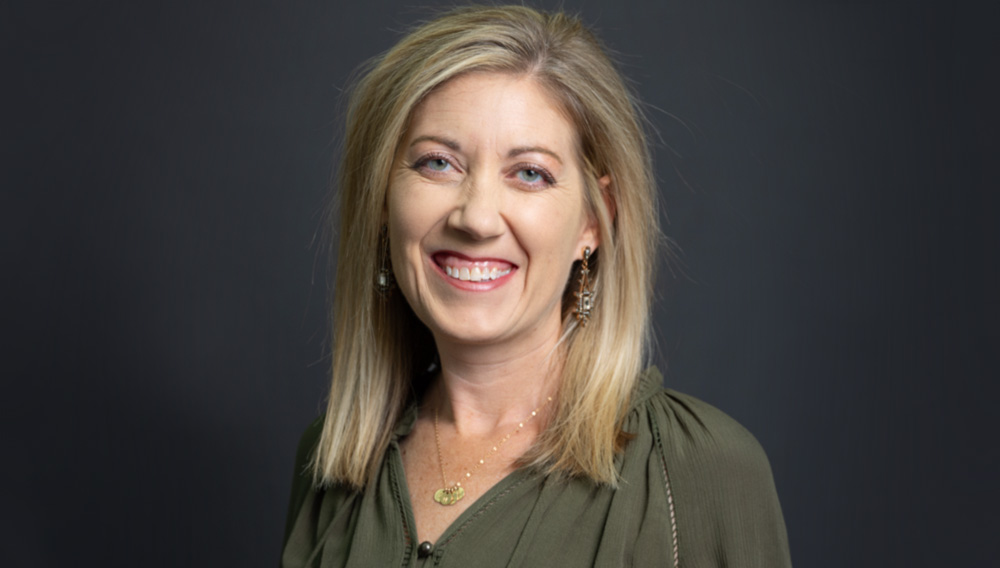
Brooke Morford, PsyD
Faculty, Psychology
College of Liberal Arts and Sciences

Institutional Accreditation
Excelsior University is an accredited institution and a member of the Middle States Commission on Higher Education (MSCHE or the Commission) www.msche.org. Excelsior University’s accreditation status is accreditation reaffirmed. The Commission’s most recent action on the institution’s accreditation status on June 23, 2022 was to reaffirm accreditation. MSCHE is recognized by the U.S. Secretary of Education to conduct accreditation and pre-accreditation (candidate status) activities for institutions of higher education including distance, correspondence education, and direct assessment programs offered at those institutions. The Commission’s geographic area of accrediting activities is throughout the United States.
Excelsior’s academic programs are registered by the New York State Education Department and/or have Florida-based licensing with the Commission for Independent Education, Florida Department of Education (License No. 12928).
