How AI and Digital Twins Are Changing Mechanical Engineering
What if you could test a machine before it existed, predict when a part might break, or use AI to quickly create new designs? That’s the future of mechanical engineering—and it’s already taking shape. Artificial intelligence and digital twins are giving engineers innovative new ways to design, simulate, and improve machines using real-time data and virtual models. These technologies are expanding what’s possible, opening the door to smarter designs, more efficient systems, and innovative solutions to today’s complex challenges.
Living Through Industry 4.0
Industry 4.0, or the Fourth Industrial Revolution, was the term first introduced in 2011 to define the rapidly emerging industrial technology in the world. Industry 4.0 is transforming manufacturing through technologies like AI, cloud computing, 3D printing, Internet of Things (IoT), robotics, and digital twins. By combining real-time data with smart machines or automated systems, manufacturers can create more efficient, flexible, and responsive items.
What Are Digital Twins, and How Do They Work?
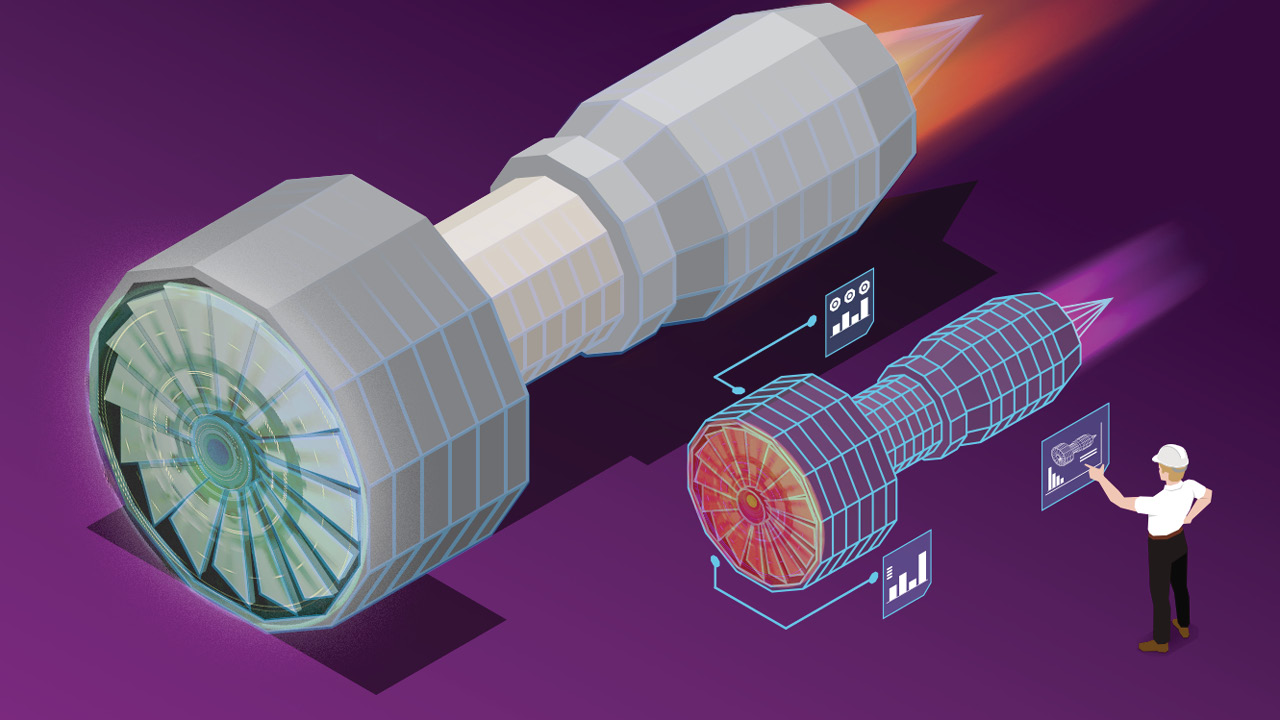
A digital twin is a detailed virtual representation of a physical product, machine, process, or entire facility. It uses real-time data and simulations to show how the physical counterpart acts. Unlike an ordinary model, a digital twin changes throughout the item’s life cycle. This allows engineers to design, test, troubleshoot, and fix systems in a virtual environment before building or making physical changes. By utilizing Industry 4.0 technology, including extended reality, digital twins can help manufacturers improve product quality, streamline production, help with maintenance, reduce waste, train employees, and make smarter decisions.

How AI and Digital Twins Work Together
Artificial intelligence and digital twins rely on data, so combining the two technologies creates powerful opportunities for mechanical engineers. AI can analyze the large amounts of data generated by a digital twin to identify patterns, make predictions, and improve performance. For example, AI-enhanced digital twins can predict when an aircraft engine may require maintenance. By learning from historical data and analyzing new information, digital twins can make accurate predictions, helping engineers design more efficient systems and make smarter decisions.
The Benefits of Combining AI with Digital Twins
AI-powered digital twins are beneficial to mechanical engineers and manufacturers in a variety of ways, including:
- Predictive maintenance: AI detects potential equipment failures early, reducing downtime.
- Smart data processing: AI analyzes large volumes of data to uncover useful insights.
- Faster design: AI allows engineers to test more design possibilities in less time.
- Energy optimization: AI improves efficiency, output, and energy use throughout the design, production, and maintenance processes.
- Smart recommendations: AI provides guidance to help engineers troubleshoot problems and make faster, better decisions.
- Smart solutions: AI not only identifies problems but also recommends solutions and next steps.
- Safe virtual testing: Engineers can test system changes virtually before implementing them in the real world.
Skills You Should Develop to Work with Digital Twins
Working with AI and digital twins requires technical, engineering, and interpersonal skills. Mechanical engineers need to understand data analytics, IoT, programming languages like Python, simulation and modeling tools, and cloud computing. It’s also helpful to have strong engineering and industry knowledge. In addition, problem-solving and communication skills help engineers and engineering techs troubleshoot issues, interpret complex data, and explain issues to others.
Start Your Career in Mechanical Engineering Technology at Excelsior
As AI, digital twins, and other emerging technologies continue to reshape mechanical engineering, professionals with a strong foundation in engineering and technology will be most successful in this field. Excelsior University’s Bachelor of Science in Mechanical Engineering Technology program teaches you the technical knowledge and hands-on skills needed to adapt to emerging technologies. Excelsior also provides academic support and resources to help you stay on track, and Career Readiness can help you explore career paths, strengthen your resume and interview skills, and put your degree to work.
Whether you’re looking to advance in your current role or transition into a new career in engineering technology