
Transitioning to Civilian Life: How to Choose an Online College for Veterans

The challenges can mount quickly for veterans when they make the transition to civilian life. They leave a life of service to their country to move into an academic environment and job market that can seem like another world. Providing online college for veterans is an important way society can give back to veterans who have served.

Fortunately, colleges offer support for veterans. But some offer more than others. Excelsior College proved its commitment to veterans five decades ago with the creation of a Center for Military and Veteran Education that provides straightforward answers and support for veterans who become students. Chris Johnson, director of the center, said veterans have concerns beyond just handling academics when they leave the service for college.

“There can be uncertainty in terms of finances, living situations and family, and job prospects. Restarting or starting school for the first time can add additional stress to an already stressful time,” Johnson said.

What Makes a University “Military Friendly”?

Many colleges call themselves “military friendly.” But what exactly does that mean? For veterans, it’s more important for schools to offer a strong mix of services and programs designed to help them succeed. The following three factors can make a school a better choice for veterans.

Granting Credit for Military Training

A military-friendly college should review what a veteran learned in military training for potential credit in similar college courses. Excelsior College considers previous college credits, military training and experience, and CLEP and DSST exams.

Veteran Services

Campuses that provide specific support for veterans show their commitment to veterans’ success. The best schools feature advisors trained to work with veterans on both academic and career planning. These schools can better help veterans handle the unique challenges they face as they enter civilian life.

Clear Financial Aid

The bureaucracy around financial aid is bewildering. Veteran friendly schools assign a staff member to work with veterans on financial aid, giving them information on the GI Bill®, Yellow Ribbon Program, and other scholarship and grant opportunities.

Johnson noted the complex web of financial support “can create administrative stresses that are difficult to navigate for civilians, not to mention veterans who may not have had any experience or guidance on these things.” That’s why the center offers support for veterans on financial aid throughout their school career.

Many service members don’t realize how beneficial the GI Bill® is and leave the military without understanding their real value in the civilian workforce. Your skill sets are valuable, and employers actively seek veterans because they can learn new skills and concepts and apply them under real-world pressure.

What Excelsior College Offers Veterans

Excelsior College has a long tradition of support for veterans who pursue a college degree. In 50 years, the school’s Center for Military and Veteran Education has worked with more than 72,000 service members, veterans, and their family members.

The school offers a generous credit transfer policy that allows veterans to earn their degrees faster. It also offers online courses with flexible eight-week and 15-week terms. Many veterans prefer online courses through the college, which allows them to earn their degree while working a job. Many also feel more at ease online rather than on campus with younger students.

Every veteran at Excelsior College works with a Veteran Admissions Counselor who has expertise in issues that impact veterans. They help students clarify academic goals and assist with setting up financial aid. Once enrolled, veterans work with a Veteran Academic Advisor who helps them with long-term degree planning, success skills, and navigating college financial and academic resources.

Most veterans attend Excelsior College to complete their bachelor’s degree, Johnson said. However, once they become familiar with online learning, some veterans move on to earn a master’s degree that “helps them further set themselves apart in the job market.” A Master of Public Administration is a great choice for military veterans who would like to transition to a civilian government position.

Excelsior College graduates also offer thoughts on their experience earning a degree at the college after military service. Robert Trawick, a 2019 graduate with a Bachelor of Science in Liberal Arts, said the veterans center “was always helpful, knowledgeable, understanding, and available.”

Melissa Burger, who earned a master’s degree in cybersecurity, said the center, library staff, and academic advisors all supported her. She said she would tell veterans considering college that “you are worth a better paying job, more self-confidence, that promotion at work, and so much more.”

GI Bill® is a registered trademark of the U.S. Department of Veterans Affairs (VA). More information about education benefits offered by VA is available at the official U.S. government Web site at benefits.va.gov/gibill/.

Hydroponics 101: Growing Cannabis as a Career


The cannabis industry is full of jobs, from horticulture to marketing to finance, and more. It can be overwhelming deciding which path fits your skills best when deciding to pursue your dream of working in the cannabis industry. If you’re interested in hydroponics and cannabis horticulture, here’s a quick rundown of what it encompasses and the different methods you might encounter as a hydroponic plant grower.

What Is Hydroponic Growing?

Hydroponic growing is a method of growing plants without soil. When you break down the word hydroponic, “hydro” means water and “ponos” means work. This means that water rather than soil does the work, providing life to the plant with the addition of added nutrients. In traditional growing methods using soil, the roots of the plants have to find their nutrients in the soil, whereas with hydroponic growing methods, the nutrients are dissolved directly into the water and plants sit in what is called a wet grow environment, like clay balls.

Hydroponic horticulture systems also tend to take up less space than traditional growing methods, and the plants grow quicker and bigger.

Soil vs. Hydroponic Growing

When it comes to determining which is best for growing cannabis, there are pros and cons to both soil and hydroponic growing.

Cannabis plants like soil that is slightly acidic and drains well. It’s common for cannabis growers to add extra nutrients to the soil to make sure it gets all that it needs and perlite to help with drainage. There are pros to using soil to grow cannabis, such as the fact that it has been subjectively said it makes marijuana taste better, and it is easier to grow in dirt than with hydroponics, especially for those new to producing cannabis plants. There are cons however, such as the fact that the cannabis plant tends to grow slower in the vegetative state than it does in a hydroponic grow method, and it doesn’t tend to yield as much as hydroponically grown cannabis.

When it comes to using a hydroponic method, some of the greater pros tend to be that you have more control over the nutrients than you do with using soil, which is why craft growers have perfected this art to create small-batch cannabis harvests using special proprietary nutrient recipes. It also harvests faster and is less likely to fall victim to pests and soil-borne diseases. The cons to hydroponic growing methods of cannabis include that some believe cannabis doesn’t taste as good when grown hydroponically and the growing process can be complicated, making it an undesirable option for first-time grow operations.

Different Hydroponic Methods

Now that you understand what hydroponic growing is, and how it differs from soil methods, it’s time to explore the different methods of hydroponic growing. When it comes to hydroponic growing methods, there is deep water culture, ebb and flow, drip system, nutrient film technique, and the wick system.

Deep Water Culture: This method is when cannabis plants are placed in buckets filled with water, nutrients, and an air pump, allowing for a constant supply of oxygen.

Ebb and Flow: Cannabis plants are placed in a tray that contains a water inlet and outlet. The tray is then flooded, submerging the roots with oxygen and nutrient-rich water for a period of time, and then the water drains out.

Drip System: In the drip system method, cannabis plants are placed in a growing medium, with exposed roots, and are supplied with water from an external reservoir via drip pipes.

Nutrient Film Technique: For the nutrient film technique, cannabis plants are placed on an angled tube, allowing water to enter from one side of the tube and exit at the other. As with ebb-and-flow and drip systems, the oxygen and nutrient-rich water comes from a reservoir, and the roots of the cannabis plant are exposed to flowing water.

Wick System: The wick system puts cannabis plants in a tray above a tank of water, and the roots of the plant are in between the tray and the water. The roots are partially submerged into the water tank, allowing the roots to transport water from the tank to the rest of the plant.

It can be intimidating and overwhelming researching the different types of cannabis jobs that are out there, including cannabis grow jobs. Excelsior’s Graduate Certificate in Cannabis Control program is here to help with that, by exploring the different career paths available and teaching you the tools necessary to succeed in any path you choose. And we know that no matter what path you pursue, having an understanding of the complex regulatory environment will serve you well.

Why Should I Volunteer?

My journey into volunteering began over 20 years ago, when I was a student in high school, at the Regional Foodbank of Northeastern New York. I was assigned to complete 50 hours of community service for a school project. For several weekends, I dedicated hours to completing the community service, and in doing so, met some great people in the organization. I enjoyed communing with the different groups of people who came each week to participate in the task I was assigned to: sorting out foods that would go to local food pantries. As a bonus, it felt good that I was making a difference and giving back to our community.

Years later, I found myself reflecting on this experience and realizing how much time had gone by. My desire to volunteer and make a difference returned. I wanted to branch out of my little bubble of life, so it was time to learn about the different kinds of services offered in our community. During my journey with community service, I’ve asked myself some important questions to guide my efforts: What can I do to give back? Who are the people in need of services? And what exactly do they need services for? No matter which volunteer tasks I take on, my motivation and drive are to simply remain humble and help others.

Working with Excelsior College, I’ve learned about Volunteer Week. I had no idea it would become an annual event that I would take part in for years to come! It began as an exciting opportunity and now I couldn’t be happier to be a part of it each year. One thing that makes my volunteer experience rewarding is that I get to participate with my sister, Valerie. We both work at Excelsior as academic advisors and do pretty much everything together, in work and in life. We always motivate each other to do better and remain well-rounded. We choose to volunteer in our community because we like the idea of giving back. In addition to it being rewarding, you never know when you may find yourself needing services, and I would like to remain educated on what is available in the community.

When it comes to Volunteer Week, I look forward to this time of year as I have a chance to get out into the community and learn about a project that I’m not familiar with yet. In past years, I have done some work for To Life!, an organization that provides support services for people with breast cancer, where I helped clean and paint the studio. Last year, I went to the Veterans Miracle Center to help sort the donations they received from organizations and community members, and prep items for the Center to give to those in need.

Some organizations send Excelsior a letter of appreciation of the volunteers who came to help. Those letters are a great reminder that we are building relationships with other organizations and that Excelsior College employees are making a positive impact on our community.

At last year’s Charter Day, a day that celebrates the past, present, and future of Excelsior College, I received an Employee Recognition Award for Volunteerism. This award meant a lot to me as I was recognized for the acts of kindness I completed to help others and allow them to benefit from my efforts. Last year, I used almost all my volunteer time off and attended four projects throughout the year. Volunteer week is a big effort across the College to get all of us to help. However, if you keep your eyes open, you will see that other opportunities present themselves throughout the year— not just during Volunteer Week. We are fortunate that Excelsior promotes available opportunities but also encourages employees to find their own volunteer opportunities with an organization that lights their passion for community service.

If you ask yourself, “Why should I volunteer?,” consider the idea that you’re not only giving back to the community, which is a good deed, but you’re also helping the College spread the Excelsior College CARES credo. Anything that benefits the College benefits its employees. In addition, by participating in Volunteer Week and other volunteer opportunities throughout the year, you’re working with colleagues from throughout the College and building relationships with peers who you might never have gotten to know otherwise. My experience may be different from yours, but when I walk away from Volunteer Week, I always feel like I’ve made a difference in our community while representing Excelsior College and bonded with great people.


Excelsior College Hosts August 11 Webinar on How to Succeed in the Cannabis Industry

Albany, N.Y. – Excelsior College will host a webinar to hear from leading cannabis industry professionals Robert Hunt and Marion McNabb. Hunt will address how he found success in the cannabis industry — a sector of the market with rapidly growing career potential. McNabb, president of the Virtual Cannabis Center of Excellence INC (CCOE) and the former CEO and co-founder of Cannabis Community Care and Research Network (C3RN), will share additional industry insight. The Zoom webinar will be held on Tuesday, August 11 from 2–2:30 p.m. ET.

Hunt is founder and principal for Linnaea Holdings, a holding company that makes equity investments in California-based cannabis companies. He was previously the founding partner of Tuatara Capital, the world’s largest private equity firm for cannabis businesses, and founder and manager of Shingle Hill, a boutique consultancy and marketing intelligence firm for the cannabis industry. He assists entrepreneurs in developing business strategy and helps position them to be regional or national powerhouses.

As president of CCOE, McNabb leads the virtual resource and network of cannabis industry professionals, academics, policy makers, healthcare providers, consumers, and patients who aim to break the stigma and advance social justice in the cannabis industry. She is also a global health infectious disease researcher and practitioner.

“We are very excited to host this webinar, stated Scott V. Dolan, dean of the School of Graduate Studies at Excelsior College. “The cannabis industry is forecasted to grow significantly. A deep understanding of the market and its regulatory complexity will help those in the industry to be successful. This webinar should be of great interest to anyone interested in learning from industry experts about what it takes to succeed.”

This webinar will cover:

  • How to get started in the cannabis industry
  • What’s required for a successful career in the industry
  • Unique quirks and nuances of medical and adult-use cannabis
  • How the proper education and training can support your success
  • Q&A

To register, visit https://excelsior.zoom.us/webinar/register/WN_NsD0NsyWRtWFQT99AzB9fA

ABOUT ROBERT HUNT

In addition to his cannabis companies, Robert Hunt is counsel in the cannabis law practice group at Greenspoon Marder LLP. He earned his law degree from Suffolk University Law School and a bachelor’s degree from the University of Vermont.

ABOUT MARION MCNABB

Marion McNabb has more than 15 years of global public health experience working in the areas of digital health, HIV/AIDS, maternal and child health, and family planning, working primarily in Africa and Haiti. She earned a Doctor of Public Health from Boston University School of Public Health and a Master of Public Health from the Johns Hopkins University School of Public Health.

 #  #  #

Media Contact:

Alicia Jacobs, ajacobs@excelsior.edu, 518-410-4624

 ABOUT EXCELSIOR COLLEGE

Excelsior College (excelsior.edu) is a not-for-profit online college focused on helping adults complete their degrees and advance their careers. The college contributes to the development of a diverse, educated, and career-ready society by valuing lifelong learning with an emphasis on serving individuals historically underrepresented in higher education. Founded in 1971, Excelsior meets students where they are — academically and geographically — removing obstacles to the educational goals of adults pursuing continuing education and degree completion. Our pillars include innovation, flexibility, academic excellence, and integrity. Learn more at excelsior.edu.

Excelsior College’s New President, David Schejbal, Starts on August 1

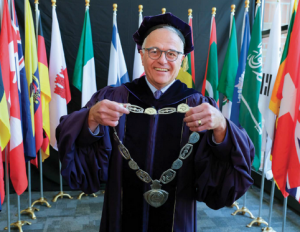
Albany, NY — On August 1, David Schejbal became the fourth president of Excelsior in the College’s nearly 50-year history as a distance learning institution for adult learners.

Excelsior College President

Schejbal brings extensive experience in leading online education institutions and supplying higher education opportunities for working adult learners. His deep involvement and significant accomplishments make him the perfect fit for Excelsior during these rapidly changing times in higher education.

“I am delighted to be the fourth president of Excelsior College, and I am very much looking forward to working with the talented staff and faculty of the College,” said Schejbal. “I am deeply indebted to Jim Baldwin for his gracious and thoughtful transition process and for the outstanding leadership that he has provided to the College for the past six years. Excelsior is an outstanding institution and supports students of all ages as they pursue degrees and credentials. Higher education is essential to economic and social wellbeing, and I am excited to begin my journey at Excelsior.”

Schejbal served as vice president and chief of digital learning at Marquette University. Prior to joining Marquette, he was dean of continuing education, outreach, and e-learning at the University of Wisconsin-Extension, working across all 26 campuses of the system to extend the resources of the University to communities throughout the nation.

Throughout his career, Schejbal’s primary focus has been on making education accessible, affordable, and flexible for all students. His vision for inventing ways to reach beyond the traditional higher education model to meet the needs of an increasingly changing student spectrum has made him a leading voice in adult and non-traditional higher education and will help propel Excelsior College forward to reach and best serve students.

###

About Excelsior College

Excelsior College (excelsior.edu) is a not-for-profit online college focused on helping adults complete their degrees and advance their careers. The college contributes to the development of a diverse, educated, and career-ready society by valuing lifelong learning with an emphasis on serving individuals historically underrepresented in higher education. Founded in 1971, Excelsior meets students where they are — academically and geographically — removing obstacles to the educational goals of adults pursuing continuing education and degree completion. Our pillars include innovation, flexibility, academic excellence, and integrity. Learn more at excelsior.edu.


Media Contact: Alicia Jacobs

Email: ajacobs@excelsior.edu

Phone: (518) 410-4624

Excelsior College Announces Two New Hires in the Provost’s Office

 Albany, NY – Following a national search, Excelsior College announces the addition of two new employees with extensive experience in higher education who will be joining the Provost’s Office in August. Heather Chakiris will be the associate vice president for student success and Lisa R. Braverman will join the College as vice provost for academic and faculty support.

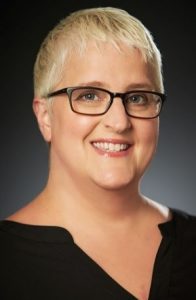
Heather Chakiris A champion of adult learning, prior to joining Excelsior College, Heather Chakiris was chief student experience officer and director of student and alumni services at UCLA Extension, University of California. In this role she provided executive-level leadership for enrollment management strategy and the creation of the student-service experience for one of the nation’s largest continuing and online education institutions. Before joining UCLA, Chakiris worked at The Pennsylvania State University for almost 25 years, both in its World Campus and Distance Education divisions. She held several leadership roles, including associate director and director of advising and learner success, assistant director and associate director of student services, and chief strategist and brand manager.

Chakiris is a longtime contributor to her field as an author, speaker, and consultant, authoring or co-authoring several articles and chapters about online higher education. She has served as chair, associate chair, and chair-elect for various University Professional and Continuing Education Association (UPCEA) regions and networks. She is currently vice-chair, Diversity and Inclusion: Marketing, Enrollment and Student Services Network for UPCEA. Chakiris earned a MEd in higher education and BA in liberal arts from The Pennsylvania State University.

Chakiris said, “I am thrilled to be joining the Excelsior College family, especially at this exciting time in the institution’s history. For almost 50 years, Excelsior has been a pioneer in imagining new and innovative ways to deliver college credentials to adult learners seeking a better life through education. No longer ‘nontraditional,’ adult learners are fast becoming the classroom majorities online and on campus. Honoring their voices and experiences is critical. I look forward to walking beside Excelsior students on their journeys to success.”


 Lisa R. Braverman is a leader and innovator in the field of higher education. Her career has included both public and private colleges and universities nationally. She has served at senior leadership levels in distance, continuing, adult, and international education, as well as in strategic community and corporate partnerships.

Lisa Braverman

Most recently, she served as dean of the Anthony J. Petrocelli College of Continuing Studies at Fairleigh Dickinson University in New Jersey. Previous to this, she held posts as chief academic officer at the all-online Jones International University, associate provost for adult programs and outreach at Long Island University, dean of the School of Continuing and Professional Studies at the SUNY Fashion Institute of Technology, and dean of extended education at New York Institute of Technology.

Braverman said, “I am delighted to be joining an institution that has been a pioneer and trendsetter in the online, adult, and continuing education space for so many years. I greatly look forward to contributing my experience and knowledge to helping propel Excelsior College to the top of the list of online providers in the higher education market.”

Braverman also has served in leadership positions in continuing higher education associations, including on the board of directors of both the University Professional Continuing Education Association (UPCEA) and the Association for Continuing Higher Education (ACHE). She also served as chair of the UPCEA’s Leadership Commission and past chair of its Leadership and Strategy Network. Braverman is certified by the Institute for Engaged Leadership in Online Learning of the Online Learning Consortium (OLC), where she served as lead institute moderator. She holds a certificate in distance education from the WICHE Cooperative for Educational Technologies.

A frequently published author, she has a chapter on blended completion programs published in the “Handbook of Research on Growing, Building, Sustaining Quality E-Learning Programs.” She earned a PhD from New York University and is regularly invited to give presentations and moderate panels on the topics of transformative leadership, innovation, online learning, and entrepreneurship in higher education.


###

About Excelsior College

Excelsior College (excelsior.edu) is an accredited, not-for-profit online college focused on helping adults complete their degrees and advance their careers. The college contributes to the development of a diverse, educated, and career-ready society by valuing lifelong learning with an emphasis on serving individuals historically underrepresented in higher education. Founded in 1971, Excelsior meets students where they are — academically and geographically — removing obstacles to the educational goals of adults pursuing continuing education and degree completion. Our pillars include innovation, flexibility, academic excellence, and integrity. Learn more at excelsior.edu.

Media Contact: Alicia Jacobs

Email: ajacobs@excelsior.edu

Phone: (518) 410-4624

Careers for Graduates with a Health Science Bachelor’s Degree

Excelsior College’s Bachelor of Science in Health Sciences—with optional concentrations in health and wellness, management, and public health—is designed for people new to or already working in the health care industry who want to grow their careers.

Career settings for those who enter the health science bachelor’s degree program include:

  • Hospital
  • Community clinics
  • State, county and local health agencies
  • Nonprofit organizations

Jobs for Health Science Bachelor’s Degree Graduates

Graduates with a health science bachelor’s degree can choose from one of many different career pathways. The following are some of the top jobs for this degree, including salary estimates using Payscale.com and Glassdoor.com

Keep in mind that salaries can vary depending on where you work and the exact nature of your job.

  • Junior Health Consultant–$67,750
  • Health Promotion and Quality Improvement Specialist – $59,481
  • Health Promotion Coordinator—$50,358
  • Community Health Navigator I–$44,200
  • Health educator–$44,200
  • Disease Intervention Specialist–$40,772

What You Learn in the Health Sciences Bachelor’s Degree Program

Excelsior College’s Bachelor of Health Sciences program helps you gain critical industry skills and information.

  • Leadership skills within organizations and evolving health care systems
  • Aptitude to identify and evaluate evidence for sound decision making
  • Higher-order thinking and approach in responding to health care issues and societal needs
  • Knowledge of culture and appreciation of diversity in planning and evaluating health care
  • Ability to implement evolving technologies in the planning and evaluation of health care
  • Ability to incorporate multiple strategies of communication with clients, members of the multidisciplinary team, and other stakeholders
  • An understanding of legal, ethical, and policy issues within health care delivery systems
  • Specialized knowledge and skills in the management and delivery of health care services
  • Commitment to lifelong learning in pursuit of excellence in the practice of a health care profession


What Graduates Have to Say


The health sciences bachelor’s degree program has given many students the opportunity to advance their careers in health care. Graduates from the Excelsior College Bachelor of Science in Health Sciences program have praise for the program. They also offer insight into how the program helped their careers.

Jenn Buyce, who earned a health sciences bachelor’s degree in 2015, said her degree helped her “communicate better and take a broader look at issues. I now look at the big picture and explore the potential impact of every decision.”

Beverley Ann St. Louis, who graduated from the program in 2014, said the program offered skills and knowledge that impact her job. “I could relate what I learned in class to how I could be an asset to my company,” she said.

Those seeking to transfer from another academic institution also will find support at Excelsior College.

“I really didn’t miss a step because Excelsior helped me transition into a program using the credits that I had,” said Alfreda Adams, a 2012 graduate of the program. Learn more about our Bachelor’s Degrees in Health Sciences.
 

How To Go Back To School As An Adult

Many adults realize every year that a college degree serves as a gateway to a better life and that online learning gives them an unprecedented opportunity to go back to school and further their education. While they don’t fit the typical profile of a college freshman depicted in movies and the media, adult learners make up a large percentage of university students.

How large a percentage? National Public Radio reports that about 40% of all college students are 25 or older. And the term “adult learner” can refer to a variety of people. For example, some students going back to school dropped out of college earlier in life. They may have left school for military service, work full-time, or to raise a family.

Others decide to go back to school and enter college for the first time long after high school graduation. Whatever the case, they all are excellent candidates for returning to college. Excelsior College, with its many areas of study and flexible online learning programs, can provide adult learners the solutions they need to return to college and earn their degree.

Online Education Makes a Difference

Online courses have opened the door for more adult learners to go back to school. They allow working adults to hold down a full-time job while furthering their education. They have the flexibility for when they view lectures and do coursework.

Excelsior College offers a wide range of associate and bachelor degree programs that give students flexibility in when and where they attend class. All they need is a computer connection, a commitment to organizing their academic schedule, and the ongoing support of Excelsior College faculty and advisers.

Excelsior College also offers a generous transfer credit policy. Adult learners who are returning to college should check the Excelsior College transfer policy to see if they can receive credit for courses they have taken.  Some students may earn credits by passing an exam. In either case, they can save time and money – and graduate faster – through the credit transfer program at Excelsior College.

Going Back to School: Tips for Adult Learners 

Adult learners face different challenges than other students. Some tips for adult learners who decide to go back to school include the following.

  • Choose a school that suits your needs. Online learning allows students from anywhere to go to the school of their choice. Pick a program that meets your academic and budgetary goals.
  • Brush up on skills. Before going back to class, brush up on what you already learned in areas you think could prove challenging.
  • Organize. If you take online courses, it makes it easier to schedule classwork around working a full-time job and your personal life. However, it’s important to create and stay with a good schedule that allows you to get everything done.
  • Develop a support system. Get friends, family, and everyone in the house onboard with your academic goals. That way they will understand, for example, that Mom is not always available during “school time” even though she is in the other room. They also can become the biggest cheerleaders for you as you strive to advance your education.
  • Find a generous transfer policy. As mentioned above, it’s important to get credit for what you have already learned. That’s why Excelsior College offers a generous transfer policy that can get you closer to earning a degree that much faster.
  • Benefits of Online Learning

Online college degree programs have become an accepted part of the nation’s educational landscape. They must meet the same high standards of accreditation as traditional programs. It’s smart to check a school’s accreditation status through the U.S. Department of Education.  Most employers today accept online degrees just as well as traditional ones, according to U.S. News and World Report.

The following are some of the areas where online learning provides great benefits.

Flexibility

Online courses offer far more flexibility than traditional courses. This is especially a benefit for working professionals who must schedule academic study around their busy professional and personal lives. Those with children also see tremendous advantages in online learning. Just not having to commute to class alone can make a big difference, especially for those in urban or high-population areas. 

Continue Career Growth

In most careers, a higher-level degree can open the door to better jobs and pay. In the past, professionals had to take time off to earn a degree. Now, online courses make earning a degree while maintaining a job doable. It also allows students to immediately apply what they learn in class immediately to their job.

Growing Self-Discipline

With online learning, you either have self-discipline or you learn it very quickly. Without having to physically attend class, students must organize their schedule and stick to it. Online students require organizational and time-management skills. Both are huge benefits of online learning because these skills will serve them well throughout their career.

Improving Soft Skills

Some may think that online learning is isolating, but quality online programs offer the chance to communicate not only with professors but also with fellow students. Because online classrooms have students from around the world, the chance to practice soft skills such as communication and collaboration are higher than in traditional classrooms.

Networking Opportunities

Chats, discussion boards and video conferencing allow students to communicate with each other. And with online degree programs, that can mean the chance to network with people from around the world. All college degree programs allow for great networking opportunities, but online learning can greatly expand your network’s geographic range.

Access to Expertise

Another reason online courses attract so many students is because of the access to expertise that students might not find in their local area. In some cases, nearby colleges may not provide the courses you want. But with online learning, you can find exactly the degree program you want, taught by professors who are experts in the field. 

NCLEX 101: All About Nursing’s Most Important Test

Every U.S. state has different registered nursing licensing and continuing education requirements. There is, however,  one thing nurses in every state have in common: They must pass the NCLEX-RN exam. It remains the last necessary step for nurses to earn their license.

Excelsior University focuses on this issue by providing all student and graduate nurses with test preparation. Partnering with the ATI, Excelsior provides graduate nurses the exam preparation they need to pass the NCLEX, becoming Registered Nurses.

The Excelsior University’s Associate in Applied Science in Nursing program trains students to become RNs and pass the NCLEX. Students at Excelsior University who follow the university’s guidelines for test preparation achieve a 98% success rate on the NCLEX.

What Is the NCLEX-RN Exam?

In 1982, the National Council Licensure Examination (NCLEX) became the nationwide test for nurse licensure in the United States. The NCLEX-RN assesses the knowledge and skill level of graduate nurses who wish to become an RN.

Nurses must first apply to the state where they want to earn licensure. It is important to review the rules of that state before applying for a license. Each state’s Nursing Regulatory Body (NRB) maintains its specific requirements.

The next step is to register to take the NCLEX with Pearson VUE. The cost to take the test is $200.

Before taking the exam, you can download a test plan that provides a comprehensive overview of the content areas covered in the exam.

Taking the NCLEX

Pearson VUE administers the NCLEX. Pearson offers the test year-round and has testing locations across the country. Nurses can take the NCLEX at any Pearson Professional Testing location, even if it is outside of the jurisdiction where they want to earn licensure.

On the day of the test, arrive at the testing center at least 30 minutes early. Have an ID showing your given and surname match exactly with the test authorization email you received from Pearson. A marriage license or a divorce decree are the only two acceptable forms of identification to show your name has changed.

Pearson staff may take your biometrics, including signature, photograph, and palm vein scan. Test-takers have four hours to complete the exam. There are two optional breaks after the first two hours and another after three and a half hours.

Getting Your Results

Some jurisdictions have signed up for the Quick Results Service from Pearson, which allows you to get results in two business days. If not, you can get this service yourself by paying an additional $7.95. 

Results are only delivered to nursing graduates through the NRB that oversees the jurisdiction where they want to become licensed. 

If you did not pass the test, Pearson sends a Candidate Performance Report that shows how the candidate fared in each of the content areas within the test plan. Students can use this to study for retaking the exam.

Excelsior University’s partnership with ATI provides graduate nurses free access to the Virtual-ATI NCLEX Revie offering preparation tutorials in nurse logic and learning systems. 

Within 30 days of graduation, Excelsior University offers a 12-week session through the ATI virtual classroom. The resource lets students work as they prepare for the NCLEX-RN. Students must complete at least 50% of the virtual review course for Excelsior University to release final documents to the Board of Nursing, allowing you to sit for the NCLEX-RN.

Excelsior College Bids Farewell to Third President

Albany, NY —James N. Baldwin, the president and chief executive officer of Excelsior College, will retire on July 31, 2020. Baldwin was appointed to the role by the Excelsior College Board of Trustees in October 2016, after serving as the executive vice president of the College since September 2014. Baldwin was only the third president in the College’s 49-year history.

Jim Bladwin 20202 Commencement

Baldwin’s fundamental belief in the transformative power of education has shaped Excelsior College. His tenure introduced the concept of servant leadership to the College, where the leader has a service-first mindset and actively seeks to develop and align an individual and a collective sense of purpose with the mission and values of the organization.

Baldwin has spent most of his career working in education, first in public schools and then as chief of staff and acting deputy commissioner for higher education in the New York State Education Department. He was also the executive deputy secretary of state for New York from 1983 to 1995. Before joining Excelsior, he served as district superintendent for Questar III Board of Cooperative Educational Services. In that role, he was a regional representative of New York’s commissioner of education and the CEO of the educational cooperative that helps school districts operate more efficiently and effectively by pooling their resources and sharing costs.

Baldwin came to the College during a unique time. “Jim was faced with challenges that, with the help of his team, he turned into opportunities and set the College on a path of transformation,” says Helen Benjamin, chair of the Excelsior College Board of Trustees. “I could not be more pleased with the service Jim Baldwin has rendered on behalf of the College during his tenure.”

Baldwin has left the next president of Excelsior College, David Schejbal, PhD, with a solid foundation on which to build the future and a team of capable leaders and colleagues committed to working with his successor.

###

About Excelsior College

Excelsior College (excelsior.edu) is a not-for-profit online college focused on helping adults complete their degrees and advance their careers. The college contributes to the development of a diverse, educated, and career-ready society by valuing lifelong learning with an emphasis on serving individuals historically underrepresented in higher education. Founded in 1971, Excelsior meets students where they are — academically and geographically — removing obstacles to the educational goals of adults pursuing continuing education and degree completion. Our pillars include innovation, flexibility, academic excellence, and integrity. Learn more at excelsior.edu.

Media Contact: Alicia Jacobs

Email: ajacobs@excelsior.edu

Phone: (518) 410-4624

Nursing Behind Bars

Melissa Moore chooses a career in correctional nursing

If you were—or are—a nurse, what would be your dream job? Would it be working as a neonatal nurse? As a school nurse? In the ER? In any case, working in a prison infirmary probably isn’t at the top of your list. For Melissa Moore, of White Hall, Arkansas, however, it was the place she finally felt she belonged.

“It’s really not that scary,” Moore says about working in the infirmary at the Tucker Unit of the Arkansas Department of Corrections in Tucker, Arkansas. As director of nursing, Moore oversees a staff of 12 nurses, three certified nursing assistants, and three ancillary staff members. In her role, she assists the nurse practitioner and physician. The infirmary at Tucker has a full dental clinic and provides vision exams, medication passes, and minor surgery.

She says that most of the inmates she sees are respectful and are even eager to help out. Of course, they don’t like hearing the word “no,” says Moore, but they’ll go so far as to assist the nurses when restraining other inmates having seizures so they can be safely transported. Some inmates are also just looking for a reason to leave their cell and don’t really have a medical need, so Moore says she needs to be strict in weeding out who actually requires treatment. And some of the inmates—the patients—really do need it.

“A lot of these guys have never had quality medical care because they have addiction problems or they’re in and out of the system…They don’t know how to advocate for themselves, so we have to advocate for them,” says Moore.

Moore, who will soon have her third degree from Excelsior College, believes she has an important role to play in the lives of her patients and the nurses she oversees. Not only is it rewarding to care for people who otherwise might not be able to find care, Moore enjoys how much education is involved in her role. “I absolutely love working with younger nurses and sharing my years of knowledge and experience with them and seeing them learn something new and to experience something new for the first time,” she says. She adds she would even consider being a nursing instructor at some point in her career because she loves sharing her knowledge. In the short term, she hopes to help grow the nurse training and education program within her region of the Arkansas Department of Corrections.

Moore never saw herself working in corrections, but when her husband got sick, she started working at the infirmary on the weekends and grew to enjoy it. She says when she came to the Tucker Unit she discovered it was the right position for her, where she could use all her nursing skills in a unique environment with patients with a variety of medical conditions. Up until that point, she had moved between nursing jobs, working in urology, with orthopedic patients, in the OR, and as an OB/GYN nurse. She spent some of those years as an LPN and some of those as an RN. She earned her associate degree in nursing from Excelsior College in 2013.

“I chose Excelsior for a couple of reasons. One, it was completely online …And because it had a good reputation, and my state board approved it, and they recommended it actually,” Moore says. She wasn’t sure she could finish the Associate Degree in Nursing program, but she credits strong discipline and determination with completing it. After having such a good experience earning her first degree at Excelsior, Moore decided to return for the bachelor’s in nursing program. She credits Excelsior’s online Facebook nursing community with helping her stick to her studies and maintain confidence. “Facebook and the message boards and Excelsior—just felt like they were always there. There was always someone to kind of keep you motivated,” she says. She earned her bachelor’s degree in 2017 and is currently enrolled in the master’s in nursing education program.

Moore stays motivated in her job because she has always wanted to help people. Being adopted as a sick child, she always wondered what her purpose was. It wasn’t until she was able to care for her parents in their final days, like they had cared for her, that she knew she was needed. She believes her patients also need her and even though corrections is almost a taboo subject, she believes she can make a difference in the lives of the inmates. “It’s really rewarding to know that at the end of the day, you helped somebody that most of society turned their back on,” she says. Learn more about Excelsior College’s Associate of Applied Science in Nursing.

More from Melissa Moore:

What’s the biggest difference between bedside nursing and correctional nursing?

“The whole aspect of compassion is different. You know, there’s no therapeutic touch, there’s no sharing personal stories. You have to learn to still show compassion without overstepping those bounds. So a lot of active listening. A lot of, you know, stick to your word. If you say you’re going to look into something, then actually look into it. Those are the ways that we’re able to show compassion and care to our patients.”

What is the most important trait that you need to succeed in your job?

“You really have to be confident in yourself…you have to be confident that you’re going to make the right decisions and that you know how to be a team player.”

What is the best advice you’ve ever received?

“It actually came from my dad. He said to always further your education; that nobody gets anything out of your education but you, and that’s always kind of stuck with me…And if you ever stop learning, that’s when you get yourself in trouble.”

5 Tips for Positioning Yourself as a Leader in the Cannabis Industry

It’s difficult to rise above the noise of your fellow cannabis industry professionals due to the popular and fast-paced nature of the industry. Some individuals have the advantage of being industry leaders due to success with creating a company that sells unique products that became instant hits, or because they were associated with a particularly successful company through networking or previous employment. This type of experience can get them far, but it isn’t the only way to land a career in cannabis. So how do you position yourself as a leader in the cannabis industry when you’re just starting out?

1. Creating Original Content for the Cannabis Industry

The best way to get started on making a name for yourself in the cannabis industry is by creating original content. When you create original content, you demonstrate relevance and provide value to other cannabis industry professionals. Remember, you don’t have to reinvent the wheel. So instead of trying to come up with never-before-talked-about topics, take a conversation and give your own spin and insight on it—turn it into something that’s your own. Try podcasts, blogging, or hosting webinars.

2. Build Cannabis Industry Thought Leadership

Building depth of thought leadership is important for positioning yourself as an expert in your field, especially in the cannabis industry. Creating thought leadership content helps with both B2C (business to consumer) and B2B (business to business), allowing potential partners and potential clients to see where you stand on issues, your thoughts on current events, or other relevant industry information. You can engage in thought leadership by doing research and positioning yourself as an expert in a field. Work to develop insights on cannabis industry trends and the direction you think the industry is headed.

3. Promote Yourself Within the Cannabis Industry

The more you get your name out there, the more people will begin to recognize you and your expertise. Easy ways to do this are by speaking at public events like conferences or summits, as well as submitting your name for awards that you are qualified for. Remember, when promoting yourself, you have the ability to show others your value and the value of your work. Promoting yourself as an expert allows others to recognize you and your work, and potentially build partnerships and career opportunities.

4. Talk About Your Journey into the Cannabis Industry

One of the biggest ways to get the attention of others is to share your story. How did you get into working in cannabis? What steps did you take along the way? What type of hardships or obstacles did you encounter? People enjoy being able to relate with others through storytelling, as it helps create a deeper mutual understanding. When this happens, it’s much easier to bridge a relationship between a listener and you. It’s also a great opportunity to promote your accomplishments.

5. Build Your Career as a Cannabis Leader with Education

Backing your expertise with an educational pillar is essential. The rise in cannabis education programs is a way cannabis career seekers can gain a certified leg up against their competition.

Interested in these programs? Excelsior College is offering one that provides the industry background and tools needed to advance in a professional cannabis career. See our program information for details if you’d like to learn more.