Alumni Give Back by Paying It Forward

Alumni giving was up last fiscal year, spurred in large part by the growth of the Pay It Forward campaign. The campaign asks new graduates to contribute to the Alumni Association Scholarship Fund, which provides scholarships for students with financial need and helps ensure they stay enrolled and earn their degrees.

When graduates make a gift of $25 or more to the Pay It Forward campaign, they receive a purple honor cord to identify themselves as a contributing member of the Excelsior College Alumni Association. Nearly half of the 418 graduates attending Commencement 2017 made a gift on Commencement day.

“Paying it forward to current students is similar to helping a family member with their college expense. I have noticed over the years that there is a strong desire with our alumni to see others succeed.” –Dwayn Hanford

Dwayn Hanford, the president of the Alumni Leadership Council, says the Excelsior family atmosphere makes this campaign so successful. “Excelsior graduates are proud of our Excelsior family and overwhelmingly thankful for the opportunities they have received after earning their degree,” he says. “Paying it forward to current students is similar to helping a family member with their college expense. I have noticed over the years that there is a strong desire with our alumni to see others succeed.”

The participation of graduates at Commencement boosted the number of alumni donors to more than 950 for the 12 months ending July 2017. Alumni giving for that period totaled more than $116,000 to support student scholarships and resources.

Overall, Excelsior awarded 1,021 scholarships to students with financial need during the 2016–2017 academic year.

Helen Benjamin Becomes Chair of the Board of Trustees

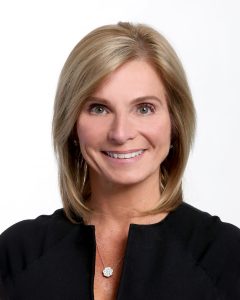
In January 2018, Helen Benjamin was elected by her peers to serve as the chair of the Excelsior College Board of Trustees. The first woman to serve as board chair, she brings a wealth of knowledge, deep experience, and commitment to higher education and student success to the position.

Benjamin retired as chancellor of the Contra Costa Community College District in Martinez, California, in December 2016 after serving as chancellor for more than 11 years. Before that, she held a variety of senior-level positions in the district since 1990. She had been an educator in secondary and higher education for more than 44 years. Benjamin started her career as a high school teacher in Dallas, Texas, and then was an assistant professor at Bishop College in Texas. She was with the Dallas County Community College District for 22 years, including four years as a dean.

She joined the Excelsior College Board of Trustees in 2011. “Excelsior’s mission of serving historically underserved adult learners no matter where they are academically or geographically resonated very strongly with me because of my own educational experiences,” says Benjamin. “Excelsior makes a huge difference in the lives of so many students, and I enjoy being a part of an institution with such an important mission. One of my goals as an educator has always been to support underserved students because I identify with them, having attended segregated schools through my years as an undergraduate student.”

She says she is honored to have been selected to chair the Board of Trustees and intends to continue the leadership work of those who have served in the position before her to ensure Excelsior remains true to its mission.

In addition to her work with Excelsior, Benjamin serves as a member of the Texas Woman’s University Foundation Board and as a volunteer at the African American Museum in Dallas. President of HSV Consulting Inc., she is a consultant to community colleges in a variety of areas.

“Excelsior makes a huge difference in the lives of so many students, and I enjoy being a part of an institution with such an important mission.” –Helen Benjamin

Benjamin maintains an active role in a variety of professional and community organizations, many committed to increasing opportunities for students of color and increasing access to education for economically disadvantaged individuals. She worked tirelessly for the improvement of community and junior colleges and served as president of the California Community Colleges CEOs, as president of the board of the Community College League of California, and as chair of the California Promise Leadership Team. She holds the distinction of being the first community college representative appointed by Congress to the Advisory Committee on Student Financial Assistance. Benjamin served with distinction as convener of the Presidents’ Round Table of Community College African American CEOs and on the Board of Directors of the American Association of Community Colleges.

Known as a champion for student success, Benjamin has written on the topic, has delivered many presentations, and has been acknowledged for her efforts. She co-authored, with Darroch Young, “Harvest from the Vineyard: Lessons Learned from the Vineyard Symposiums” (2016) and contributed to “The Chocolate Truth: An Anthology of Perspectives from Community College CEOs” (2012). She was among 20 community college CEOs from throughout the United States to participate in the first White House Summit on community colleges held by President Barack Obama.

Benjamin earned a Bachelor of Science in English from Bishop College where she graduated magna cum laude, and earned a MEd in supervision and reading and a PhD in English from Texas Woman’s University in Denton, Texas.


Partners on This Journey

For 47 years, Excelsior College has served as a model for how innovative institutions can deliver quality, affordable education, contributing to the realization of the fundamental American promise that anyone—regardless of social or economic circumstance—should be free to pursue their dreams.

As the College has evolved, so too has the world around us. Private and public institutions across the nation are grappling with how to fulfill their mission in the face of significant marketplace challenges, including a rapidly changing higher education environment, heightened competition, demographic changes, regulatory uncertainty, and a loss of government support.

Excelsior’s new strategic plan, unveiled in February, elevates our capacity to meet these challenges by building on our core strengths and creating a foundation for future growth and success through improvements to our academic programs, courses, and student services, all supported by dramatic improvements in technology.

Some enhancements will be easily identifiable to all students, such as a captivating new learning management system and the introduction of automated self-service options. Other changes will be difficult to discern but the cumulative effect will create a new, highly responsive, and fully automated student experience.

Our advisors, evaluators, and counselors will be empowered to identify and resolve student issues and problems. We will continue to recruit and retain high-quality faculty with deep expertise and rich teaching experience to foster robust learning communities that stimulate creativity, curiosity, and critical thought. We will elevate our program offerings, infusing them with writing across the curriculum, career-ready competencies, and skill-development opportunities to ensure all graduates are well-prepared to achieve their personal and career goals.

From inquiry to graduation, students will experience an exceptional level of service, personalized to their needs. For our students, Excelsior will be more than an institution. We will be a partner on one of life’s great journeys—the search for, and achievement of, self-actualization. 

A+ Tech for the Adult Student

Going to school as an adult has a way of transforming you into a modern-day magician. Juggling work, family, and life all while working on your degree requires new ways to make time, homework, and even dinner appear out of thin air!  Sometimes, however, even the most multitalented multitasker could use a little help.

How many times have you wished for a magic spell that could help you grocery shop, write that research paper, and remember to send your aunt a birthday card? While unfortunately Hogwarts doesn’t offer online degrees, technology isn’t too far off.  From apps that keep you focused, to clever tech for your kitchen, we’ve found four new ways technology has innovated to help you work smarter until science develops that magic wand!

  1. Distraction Destroyers
    We’re all guilty of sitting down at our computer with the best intention of working only to discover it’s an hour later and we’re 10 cat videos deep down a YouTube hole. Luckily there are apps that, with a little setup, can stop digital procrastination before it starts.Cold Turkey, StayFocusd, and LeechBlock are web browser extensions that allow you to block your choice of distracting websites for the certain amount of time you want to focus on work. Each app comes with smart options like redirecting an off-limit site back to something more scholarly or serving you a landing page with an inspirational quote instead when you visit Reddit in a moment of weakness. You can even program in short breaks to keep you motivated while you work. Best of all, the basic versions of all three are completely free.
  2. Smart Kitchen Tech
    We’ve heard the praises of the Instant Pot (the pressure cooker with a cult-like following), but there are a plethora of other upgrades available to your basic kitchen appliances designed to squeeze those precious extra minutes from your daily routine.The Gourmia WiFi-enabled coffee maker keeps you caffeinated without even having to leave your desk. This smart coffee pot lets you use voice commands to start brewing from wherever you are. Plus, the built-in bean grinder and programmable features makes sure you always have a fresh cup waiting during those all-nighters.

    The GE Smart Countertop Microwave Oven works with Alexa voice commands to allow you to instantly stop, start, and control your cooking. Taking things even further into the future, this microwave comes with “Scan-To-Cook” technology that reads the barcodes of most frozen foods and instantly programs cooking time accordingly, freeing you from the scourge of burned popcorn or icy-in-the-middle entrees.

  3. Household Schedule Heroes
    One of the most difficult things about going back to school is staying on top of your own class, homework, and exam schedules while also making sure the rest of your household keeps on track. Technology can be your saving grace to keep loved ones connected and organized.The Cozi Family Scheduler app brags that it “… organizes everyone’s schedules, activities, and appointments in one place that’s accessible anytime, anywhere.” The helpful color-coded calendar and programmable reminders keep your family on schedule and in the loop. Additional features like shopping lists, a meal planner, and a family journal help keep track of the details so you can keep track of your school work.

    If you’re looking for a true household command center (and have a few thousand dollars to burn) consider the Samsung Connected Touch Screen Family Hub™ Refrigerator. This fridge has a 21.5-inch screen tablet embedded in the door as well as three interior cameras that let you know how well stocked you are on your favorite items and alerts you to their expiration dates and nutritional facts. The WiFi-enabled screen that syncs with your family calendar lets you plan recipes with the food you have available and if you don’t have time to cook, lets you order from GrubHub via voice command.

  4. Academic All Stars
    You’ve just scheduled a pot of coffee with your phone, your distraction blocking app is activated, and now it’s time to study! While these last two innovations won’t guarantee you an A, they’ll certainly make it easier.

    Adult students have to be flexible and that often means getting homework or reading done wherever there’s a will and a WiFi connection. This makes having a portable, wireless power source like the Samsung Wireless Charging Pad The pad is small enough to carry in a bag or store in a car’s glove box. Simply place your QI-enabled phone or laptop on the pad and your device begins to charge without the hassle of cords and cables.The path to your degree is surely paved with reading, writing, and research. One of the most time-consuming parts of any writing assignment is making sure your sources are correctly cited. CiteThisForMe is a subscription service that helps you collect and organize sources and reading materials on any device. CiteThisForMe’s unique features allow you to cite as you write and can generate citations for a variety of source media in any commonly used style. For group projects, CiteThisForMe gives you a simple way to share research materials with your team and the plagiarism checker function compares your work against your source content to guard against any overzealous borrowing.


These innovations are just a sampling of the advancements available designed to streamline our lives with the magic of technology, but any adult student knows the real magic is as simple and as complicated as good old-fashioned drive and determination. Find out ways you can implement these clever hacks while enrolled in our liberal arts degree.

What’s your favorite technological life-hack?  Let us know on our Facebook page.

The Dangers of Negative Thinking and How to Master Positive Self-Talk

Self-talk is our internal dialogue. Some call it the voice in our head. In their book, “Understanding Psychological Preparation for Sport: Theory and Practice of Elite Performers,” Lew Hardy, Graham Jones, and Daniel Gould define self-talk as a form of self-regulation that uses affirmations—deliberate automatic statements to help control thoughts, instruct, and motivate. Positive self-talk increases self-esteem. Scientific studies have shown self-talk positively effects performance, reduces stress, enhances persistence, and improves learning.

What is Negative Self-Talk?

Every person has some form of self-talk, and it can be positive or negative. Unfortunately, most of our self-talk is negative—what is called our inner critic. In his article in the American Journal of Health-System Pharmacy, S.J. White says, “The human mind seems to focus on the negative, and we tend to berate ourselves in ways we would never tolerate from a boss, spouse, or anyone else.” Have you ever heard your inner voice say:

  • I can’t do this
  • I am going to fail
  • What a loser
  • Idiot

Negative self-talk is dangerous. Negative thoughts can affect our behavior and performance, so it is important that we focus instead on the positive. One way to silence our inner critic and to empower our self is through affirmations, like repeating, “I am improving every day” or “I did my best.”

What is Positive Self-Talk?

Positive self-talk can be motivational or instructional. Motivational self-talk involves statements that facilitate performance by increasing effort and boosting self-confidence and mood. Instructional self-talk involves affirmations intended to enhance performance. During the 2002 Wimbledon ladies’ singles tennis final between the Williams sisters, Serena Williams (who won) used hand-written notes as affirmations between games. As reported in The Guardian, Williams said these “flash cards” were “reminders to think about cues such as ‘hit in front’ or ‘stay low’ during the match.”

Athletes are taught to use self-talk to motivate themselves and improve their performance. Have you heard self-talk from athletes? Maybe “let’s go,” “stay calm,” or “focus on the ball.” Some do it aloud, but it doesn’t have to be aloud. Researchers found that self-talk is one of the strongest predictors of successful Olympic performance among U.S. athletes. Athletes and students who listen to their inner critic lose or fail more. Those who use positive self-talk consistently improve their performance significantly more than counterparts who use negative self-talk. We want to focus on eliminating negative self-talk and practice using positive self-talk.

Here are some steps for developing a positive self-talk habit:

  1. Know thyself. Find your strengths. Analyze your thoughts. What psyches you out? What motivates you? What are your strengths?
  2. Choose a mantra: To get started, choose one of two simple affirmations, such as “I am college material,” “I can do this,” or another simple, positive phrase you can repeat over and over.
  3. Practice: Once you have developed the habit of repeating this phrase to the point where it is automatic, start expanding the dialogue so that you have familiar and comfortable statements for a variety of situations. For example, “I’ve done this before and it’s doable.”
  4. Create a positive mental image or visualization: The phrases and words you choose should be those that you can immediately call up and create a visual picture of yourself doing exactly what you say. The image along with the words is a powerful combination that creates a positive message tied to a belief. Picture yourself studying as you repeat “I am a good student.”
  5. Silence your inner critic. Don’t defeat yourself or argue for your limitations. Students can be particularly hard on themselves, analyzing every moment, being too sensitive to “mistakes” they might have made, etc. Remember, when you live inside your head, your head is the only information you’re getting– and it can be wrong. Just because you feel something, doesn’t make it true. When the inner critic talks, replace the damaging self-talk with a positive statement.
  1. Focus on your successes. What have you done well? What are three strengths you can focus on? The more you know about your strengths, the less you’ll be tempted to focus on your challenges.
  2. Keep repeating your affirmations. I had one taped to my steering wheel for a long time to practice.

Self-talk can help you as a student reduce stress and improve your study habits. Why not tape an affirmation like “I am a successful college student” or “I can ace this class” to your computer monitor?


Why Diversity in Nursing Matters

In 2017, the U.S. Census Bureau estimated that ethnic and racial minority groups accounted for more than one- third of the country’s population and projected the U.S. will become a plurality nation by 2048. This means that no one ethnic or racial group will make up the majority of the population. With the country’s makeup growing ever more diverse, it’s especially important to make sure the first line of care in exam rooms represents the demographics of America’s waiting rooms.

As the country ages and national spending on health care increases, the industry continues to expand far faster than average and the U.S. Bureau of Labor Statistics predicts a growth of more than 15 percent by 2026. With the need for skilled nurses increasing exponentially, it’s going to be the industry’s challenge to make sure those new jobs are filled by as diverse a workforce as possible.

How do nursing demographics currently rank? The National Council of State Boards of Nursing’s 2017 Workforce Survey shows that nurses from minority backgrounds make up 19.1 percent of the workforce and male nurses comprise 9 percent. While these diversifying statistics are encouraging in moving nursing beyond its reputation as a majority white and female profession, the health care industry needs to continue to attract, retain, and promote a diverse nursing staff to keep pace with equal representation. Equally important to consider is that while many studies quantify diversity in terms of racial percentages, measures of diversity would do well to expand to include gender, socioeconomic background, and LGBTQ identification as well.

Why Diversity in Nursing is Important

  • Nurses who share a cultural background and experience with their patients are better able to communicate and advocate for their care.
  • Patients are better participants in their own care when they are able interact with health care providers with whom they feel more comfortable communicating their symptoms and concerns.
  • When nursing staff more accurately represent the communities they serve, it helps eliminate health disparities among underserved populations.
  • A diverse nursing staff can influence policy and decision-making within their institutions to better serve minority populations.
  • Increasing diversity in nursing can have the added trickle-up benefit of increasing diversity in nurse educators and research staff as nurses advance through the health care system.

With all-important health outcomes on the line, health care organizations are eager to recruit and retain nurses from traditionally under-represented groups, with nurses possessing a bachelor’s degree being in especially high demand. Since these under-represented populations are often at a disadvantage for educational opportunities, colleges and universities are exploring recruitment strategies that speak to those populations as well as incentives like flexible course structures and hands-on career advisement. Many large health care organizations have implemented internal committees aimed at nurturing diversity within their staff and are increasingly looking at outside partnerships with educational institutions to promote nursing as an occupation to a wider population.

Independent associations such as the National Black Nurses Association, the National Association of Hispanic Nurses, the American Association for Men in Nursing, Black Nurses Rock, and others are also working to support nurses currently in the field with mentorships, continuing education opportunities, and professional networking events.

The entire health care industry is healthier when a concerted effort is made to increase diversity. Are you ready to add your unique voice? Learn more about Excelsior’s associate, bachelor’s, master’s in nursing programs, including a dual nursing degree.


118 Excelsior College Employees Volunteer During One Week (April 8–12) Impacting 17 Community Projects

Excelsior College encourages volunteerism throughout the year and will hold the 4th Annual Excelsior Cares Volunteer Week April 8–12, 2019. A total of 118 employees plan to volunteer 260 hours by assisting on 17 community projects during the workday throughout the Capital Region and beyond.

“We are excited about the impact we make from lending time and talent to so many worthy causes,” says Alicia Jacobs, Excelsior Cares Volunteer Week organizer. “This annual event is fun for our employees. They learn firsthand about services right in our backyard while working with colleagues to make a difference.” 2019 community projects include sorting, packing, cleaning, painting, light construction, seeding, planting, making phone calls, promoting fundraising events, assisting with mailings, cooking for families, creating thank you stars from retired American Flags, and helping at an animal shelter.

Excelsior Cares Volunteer Week in Albany has grown from 7 projects in 2016 with 65 employees participating to 17 projects in 2019 with 118 employees participating. April is National Volunteer Month with National Volunteer Week celebrated April 7–13. Excelsior plans its volunteer week to coincide with National Volunteer Week.

This year, Excelsior College also provides an opportunity for employees, their families, and friends to encourage reading and raise money during April 1–May 8 by supporting the Read for Ronald McDonald House Program from the comfort of home.

The 2019 Excelsior Cares Volunteer Week will feature projects at various locations:

Monday, April 8

Cystic Fibrosis Foundation – Northeastern New York

Veterans Miracle Center (Jezreel International) in Albany

Tuesday, April 9

Refugee and Immigrant Support Services of Emmaus

Girl Scouts of NENY in Albany

Rebuilding Together Saratoga County

Wednesday, April 10

The Patroon Land Farm (connected to Regional Food Bank)

Ronald McDonald House Charities of the Capital Region

Mohawk Hudson Humane Society

Girl Scouts of NENY in Albany

South End Children’s Café

Thursday, April 11

Veterans Miracle Center (Jezreel International) in Albany

Stars for our Troops Inc.

Mohawk Hudson Humane Society

Friday, April 12

Crohns and Colitis Foundation

Alzheimer’s Association of Northeastern New York

Please contact Alicia Jacobs at ajacobs@excelsior.edu to set up interviews or photo opportunities.

O: (518) 464-8531

C: (518) 410-4624


ABOUT EXCELSIOR COLLEGE

Excelsior College (excelsior.edu) is a regionally accredited, not-for-profit online college focused on helping adults complete their degrees and advance their careers. The college contributes to the development of a diverse, educated, and career-ready society by valuing lifelong learning with an emphasis on serving individuals historically underrepresented in higher education. Founded in 1971, Excelsior meets students where they are – academically and geographically – removing obstacles to the educational goals of adults pursuing continuing education and degree completion. Our pillars include innovation, flexibility, academic excellence, and integrity. Learn more at excelsior.edu.

Exceeding His Potential: Jeremy Lampley

Jeremy Lampley has always been motivated to accomplish his goals. So far, he’s marked a lot off his list: joining the military, earning two—soon to be three—degrees with Excelsior College and starting the process to pursue a fourth.

Originally from St. Louis, MO, Lampley attended the University of Missouri-Columbia where he studied Sports Venue Management as a student athlete, but decided the traditional college route wasn’t for him. In 2012 he joined the U.S. Navy and in 2014 and 2015 he was deployed to serve in the AFRICOM tours.

While in service, Lampley heard about Excelsior’s online learning model from his mentor and thought it was right for him. He enrolled in the Associate in Applied Science and Administrative/Management Studies program in 2014 and earned his degree the following year. But he wasn’t finished. The very same August, in 2015, Lampley began working toward his bachelor’s and in 2016, he earned a Bachelor of Professional Studies– Business and Management. Lampley says of the experience at Excelsior College, “A small school like Excelsior showed me that if you want anything bad enough, you’ll have to work day and night for it.”

Lampley’s academic advisor was with him every step of the way, too, he says. “It was kind of like having a champion guide, prepping you for the greatest success,” he says of the one-on-one support he received. It helped that Lampley’s academic advisor was a recent graduate of the Master’s of Science in Management degree program and could relate to what he was going through. When Lampley finished his bachelor’s degree, she was the first person he called to say he was ready to go for his master’s.

Lampley made a personal goal to earn a 4.0 GPA for his master’s in management degree. It was difficult, he says, especially since the courses were hard and sometimes he bumped heads with the faculty. Now he realizes they helped him persevere. “They truly pushed me; they told me to write better, to think more critically…they were forcing me to be the best version of me, and so I did just that. I’ll never forget that motivational push,” he says. He also notes the courses opened his eyes and changed his perspective on the norm: “Every course was different and readjusted my mindset on a lot of things happening in HR that is overdue for change.”

During the year he spent pursuing his master’s degree, Lampley took the opportunity to volunteer instead of working full-time. He has helped out at his church, worked on peoples’ cars, and lent a hand in his community. This has helped him stay humbled and focused on his school work, but the real support and source of focus for Lampley, he says, has been the unwavering support of his girlfriend. Without her, he says he doesn’t think he could have made it through the courses.

His time spent in his master’s classes also prepared him for his next big step. The work he put into his papers, and interacting with classmates and faculty on the discussion boards prepared him for his interview with law enforcement. “Do not get me wrong, law enforcement is very intimidating; however, BUS 523 is more intimidating. It’s just something about having a 25-page paper due by Sunday,” he jokes, recalling the experiences of writing a master’s paper and interviewing for his next career. It has paid off, though; this year, Lampley will be in a new law enforcement field serving his country again.

He says if it wasn’t for this time in the military, he wouldn’t be as confident to have a badge and when he thinks about his long-term prospects for career growth, he thinks his master’s degree will be a plus.

Lampley says servicemembers have to think ahead to what’s after the military. That’s exactly what he did. Now, he is encouraging other servicemembers to pursue their degrees, too. “I tell every servicemember I come across that your wildest dreams are possible but it’s up to you to make them come to life,” he says and notes that education is not to be wasted. He says, “It may not be for everyone, but everyone that tries will learn something.”

Lampley believes places like Excelsior help people go after their education with confidence. “Excelsior is building [up] people to live out their dreams, I kid you not; every advisor, every financial aid representative is there to help you on the path of completion of your schooling,” he says. He notes, though, that it’s important to remember why you’re on your journey; your “why” is critical in what you do. Lampley says his why is, “I was put on this earth to fulfill a purpose that only I can fulfill, to serve and shine my light as brightly as possible” and he is determined to show the world just what he has to offer.

3 Ways an Instant Pot Saves Your Life as a Working Student

I don’t know about you, but sometimes—more like all the time—being a single mom, working a full-time job, and going to grad school is exhausting. There are never enough hours in the day to get everything done. So, when it comes to food, convenience tends to win out. That means a lot of takeout, or quick and easy meals to make with ingredients I have on hand.

While I’ve always been a fan of slow cookers, ever since Jack died on “This is Us,” I get a little nervous leaving my newer slow cooker on all day while I’m not home. Add to that a mischievous dog who gets into anything left on the counter, and you’re looking at a recipe for disaster. Enter, my lifesaver (and yours!), the Instant Pot.

Instant Pots were a hot gift this past holiday season and now that I know more about them, I understand why! Despite my best attempt to meal plan and prep, I often end up at the grocery store on my lunch, or popping in quick after work on my way to daycare, desperately trying to remember what I need to pick up to complete the meal I’m throwing together. The Instant Pot has turned my constant state of frazzled into a state of “yes I can!” Seriously, getting everything done, and in a somewhat nutritious manner, makes me feel like a super mom. I like to plan my meals throughout the week, and looking at my day from start to finish means I don’t have to worry or scramble after a long day.

Mornings Made Easy

Mornings in my house can only be described as chaos. Sometimes I’m running on little to no sleep from being up writing a paper, or responding to discussion posts. To get my daughter to daycare and myself to work on time, it requires getting up at 5:15 a.m.  and rushing to leave by 6:15 a.m. I have whittled out every possible thing I can in the mornings, and still I’m grabbing a banana for her and stopping for a second coffee and a muffin or bagel for myself as we rush around town. Certainly, these are not the best choices I could make; there are healthier options, but I’m so go-go-go that I can’t think about them. And I’d much rather spend some time in the morning on goal setting for the day and making my plan of attack than thinking about what I’m going to eat – or cooking! An easy and much healthier breakfast is Greek yogurt. Although it doesn’t seem like a hard thing to have cups of Greek yogurt in the refrigerator to grab and go, I never seem to have it in my house or pick it up at the grocery store. But, with an Instant Pot, I can make a huge batch of yogurt that will last a week from just one container of Greek yogurt and a gallon of milk. It needs to incubate nine hours, so it’s a perfect thing to make overnight. Might as well put my sleeping hours to use!

Lunch—Bring Not Buy

Lunches are my downfall. As a busy, working mom trying to fit schoolwork into my day, it never fails that I end up getting takeout for lunch. The problem is, my lunch hour is also a time that I typically devote to schoolwork, reading a chapter, or getting discussion posts done, and taking the 20 minutes to go get something to eat really cuts into that time. I’m a soup girl. I love soups for lunch, but making a healthy soup at home takes hours. Instant Pot is my lifesaver here, too. I can make just about any delicious soup from start to finish in 45 minutes in an Instant Pot, and use only one pan. That cuts down on my dishes and time spent in the kitchen. If I start the soup right after dinner in the half hour when my daughter plays before her bedtime routine, I’m done for the week. All that’s left to do is just place the soup in bowls to transport and go.

Dinner Time—Instant Means Instant

If you’re an adult trying to fit school in your life, especially if you’re a parent, dinner might be the last thing you’re thinking about on a daily basis. After work, evenings are spent running kids to activities and sports, helping with homework, and packing for the next day. You don’t have the time to make anything other than a simple meal, and you’re probably not even home for the hour or two it would take to make a traditional pot roast or meatloaf or pork chops. Here’s another way Instant Pots save the day: Instant Pots allow you bring weekend meals into the work week. Want to make baked potatoes to go with your dinner but don’t have an hour to cook them? In an Instant Pot, it’s 15 minutes.

Time Spent Elsewhere

To me, it’s not just about saving time and being healthier. What the Instant Pot means to me is not taking away from the amount of time I have with my daughter. It’s saving dishes and using one pot, so I don’t have to spend half an hour after my little girl is sleeping doing dishes and that time could be spent on schoolwork. It means I can still get my homework done and get to sleep at a reasonable hour. It’s my lifesaver.

Do you have an Instant Pot? Is it as life-changing for you as it is for me? Share your favorite Instant Pot recipes and the ways it’s helping you get your schoolwork done on our Facebook page!


Lending a Helping Hand: Excelsior College Highlights Giving Back & Upcoming Volunteer Week

Excelsior Cares
As part of the culture at Excelsior College, employees show the College is a caring community making an impact on both our colleagues and the community at large. One of the benefits working of Excelsior College is a generous volunteer time off (VTO) policy that gives full-time employees up to 15 hours annually for volunteering during the workday.

Alicia Jacobs, an employee who helps lead community engagement efforts, encourages her colleagues to learn about nonprofit causes by sharing time and talent through volunteerism. She says the VTO policy creates a culture that shows the work employees do inside the College is just as important as the impact made by their volunteerism outside of the College.

Jacobs helped create Excelsior Cares Volunteer Week in 2016. The 4th Annual Excelsior Cares Annual Volunteer Week will be held from April 8–12 when employees lend a helping hand on community projects during the workday. “This year, we look forward to having 136 employees help with 25 projects. This annual event creates a better understanding through firsthand experience about services right here in the community that potentially impact friends, family, and their colleagues in times of need,” says Jacobs. Volunteer Week also introduces nonprofits to employees of the College while they assist with the critical needs of the community.

In advance of Volunteer Week, Excelsior College held a volunteer fair on March 6 so employees could learn about local volunteer opportunities. Representatives from Cystic Fibrosis Foundation, Epilepsy Foundation, Rebuilding Together Saratoga, Stars for Our Troops, United Way, American Red Cross, Regional Food Bank, Best Buddies, Orange Street Cats, and Alzheimer’s Association attended and shared their organizations’ missions.

Susan Wells, founder of Stars for our Troops Inc., an organization that annually participates in Volunteer Week, shared, “Thank you for letting us have time to talk about our projects. It was fun to share opportunities that we can pass on to others.”

Stars for Our Troops
takes old, tattered, and faded U.S. flags and passes on the embroidered stars to those for whom defending the flag has made an impact. Recently, a group of veterans worked together to remove stars and in the process discovered their commonalities. If you would like to host a star party, contact S4otstarmaker@aol.com.

Volunteering is also way to give back, meet other people, learn something new, and help a great cause. It also provides volunteers with a different perspective. Although diverse in their mission, the participants in the Volunteer Fair had at least one thing in common—helping society at large and serving the needs of others by providing resources, services, supplies, food, housing, friendships, and skills.
Red Cross at Excelsior College

If you would like to volunteer with lifesaving work, the Red Cross seeks volunteers as blood transportation specialists. These volunteers transport lifesaving blood to area hospitals using Red Cross-owned and branded vehicles. Gas and tolls are covered. Volunteers can work independently or alongside a partner. Qualified volunteers need a valid driver’s license, proof of insurance, and a clean driving record of 3 or more years. The time commitment is 1–2 shifts a month for 4 or more hours. For more information, call 518-694-5103.

If you would like to support hunger initiatives, the Patroon Land Farm partners with the Regional Food Bank of Northeastern New York. On average 100,000 lbs. of food are harvested annually and two-thirds is donated to 23 surrounding communities. Located near Thatcher Park, the Patroon Land Farm is seeking volunteers from now until October to help with harvesting. It also holds an annual Strawberry Festival at the Altamont Fairgrounds and needs volunteers for this year’s event on June 15. To volunteer, email ninap@regionalfoodbank.net.
Orange Street Cats at Excelsior College

If you have a passion for saving pets, Orange Street Cats was started nine years ago when several cats where found at a building that was to be condemned. Now this organization helps foster and adopt kittens and cats, while assisting with food, liter, and vet care. It also has adult cats seeking homes. Orange Street Cats needs volunteers to help with clerical work, website updates, and photography. To volunteer, email osc@orangestreetcats.org.

If you would like to be more than a mentor, Best Buddies can use your help. Its adult citizen program pairs volunteers with people with disabilities to form friendships. Like Big Brothers Big Sisters, this is about creating inclusion and forming a bond. The time commitment is meeting a few times a month with your buddy, texting, or keeping in touch with phone calls.

Together, we can make a difference.

Excelsior College Offers Options to Students Hurt by Argosy University’s Sudden Closure

Students can apply for loan forgiveness and start over again, or seek to transfer credits they have earned to another school with a generous credit transfer policy

Excelsior College is reaching out to thousands of former Argosy University students, reminding them they have options following the sudden closure of the institution amid a federal student financial aid scandal.

The federal government pulled Argosy University from the financial assistance program after the school failed to distribute more than $16 million in federal aid to students. Most experts agree the students will never get the money back. Argosy announced this week it expects to close its campuses across the country.

Excelsior College’s concerns are with the students who now face an uncertain future. They generally have two options. The first is to seek loan forgiveness and start all over again with another institution. For those who already have earned many credits toward their degree, they can entertain the possibility of transferring to another school.

Excelsior College offers a generous transfer policy. Students can transfer up to 117 credit hours for an undergraduate program. The school also awards credit for military training and workplace experience—something many schools do not offer. In addition, Excelsior College allows transferred credits in master’s degree programs. This flexibility is all part of the not-for-profit, regionally accredited school’s mission to provide educational opportunity to adult learners. Excelsior College focuses particularly on those who live in historically underserved communities.

“We want to make sure affected students know they are not alone or without options,” says James N. Baldwin, president of Excelsior College. “Whether they choose Excelsior College or another accredited school, it’s important that these students have an opportunity to complete their college education.”

College officials also noted that Argosy University students looking for a new school should focus on nonprofit, regionally accredited institutions.

Students should also carefully consider what financial aid is available to them as they seek to transfer credits or restart their college journey.

Press Contact

Senior Manager, Internal Communications and Public Relations
ajacobs@excelsior.edu
Office: 518.464.8531
Cell: 518.410.4624

ajacobs@excelsior.edu

www.excelsior.edu

About Excelsior College

Excelsior College is a regionally accredited, not-for-profit online college focused on helping adults complete their degrees and advance their careers. The college contributes to the development of a diverse, educated, and career-ready society by valuing lifelong learning with an emphasis on serving individuals historically underrepresented in higher education. Founded in 1971, Excelsior meets students where they are— academically and geographically—removing obstacles to the educational goals of adults pursuing continuing education and degree completion. Our pillars include innovation, flexibility, academic excellence, and integrity.

Cool Courses

A glimpse at some popular course offerings and what students like about them
Business Man

BUS 323 | BUSINESS ETHICS

Students explore the nature of ethical business environments, from ethics theory and personal values to the impacts of organizational culture within the private and public sector. Students gain a deeper understanding of how ethical principles relate to the organizations in which people function, and the effects of the organization’s ethics on its reputation, functioning, and performance.

“The course goes into the historical foundations of ethics and builds on how they can be applied to modern situations. Any student in any field can benefit from this knowledge.”

Football players

SOC 247 | SPORTS IN AMERICAN SOCIETY

This course examines the institution of sports from a variety of social science perspectives, including from historical, political, economic, and sociological viewpoints. Students examine how sport reveals and demonstrates various layers of intense power and identity struggle in society, and how it is monetarily valued and compensated. They explore the broader meaning that sports have for those who participate and for those who watch.

“The course is full of enticing knowledge that invites the student as a fan to think outside the box and realize that there is more to sports than food, beverages, and friends.”

Family receiving health care

HSC 320 | HEALTH CARE ISSUES IN CULTURALLY DIVERSE POPULATIONS

Students study religious, racial, ethnic, and other subcultures that exist in our society and examine conflicts that often occur when differing cultures enter the health care arena. Students also discuss the concept of cultural competence and study strategies that health care organizations are using to create more inclusive services.

“This course has opened my eyes to things that I didn’t know. I am forever grateful that I enrolled in this course. The way I see things after this course is different from the beginning.”

Painting of Napoleon

MIL 301 | GREAT MILITARY LEADERS

Students examine the qualities of military leaders throughout history and analyze specific traits that contributed to their excellence in leadership. By examining the qualities of military leaders and analyzing specific traits that contributed to a leader’s excellence in leadership, students can isolate leadership traits and qualities that make a great leader and then apply them to new situations.

“I would definitely recommend this course to others. Military personnel and civilians can learn a lot about leadership from this course…It’s almost like comparing what we already know to the lesson and making it relate to each person.”

Child using virtual reality goggles

TECH 230 | TECHNOLOGY AND SOCIETY

This course considers technological change from historical, artistic, and philosophical perspectives and its effect on human needs and concerns. Students explore the causes and consequences of technological change and evaluate the implications of technology.

“I really enjoyed this class and the ideas that it brought to light. I was/am thinking about technology effects on society from angles I never even thought to consider.”

Starry Sky

NS 115 | INTRODUCTION TO ASTRONOMY

Students examine the nature of stars, how they are born, live, and die, and how they constitute the fundamental building blocks of the galaxy. The study of galaxy formation and evolution leads to a brief discussion of current research in cosmology, including the as-of-yet undiscovered nature of dark energy and dark matter.

“I would certainly recommend this class to others; it’s instructional and interesting to learn about the stuff that makes the composition and disposition of life in the universe.”

“I think this course is a great introduction to astrophysics and is taught at a decent pace.”

Female servicemember and child

NUR 340 | CARING FOR OUR NATION’S HEROES AND THEIR FAMILIES

Students gain skills and an understanding of the unique health care needs of military servicemembers, veterans, and their families. The course includes an overview of the military and veteran population, military culture, military and veteran health care systems, veteran health care resources, and the military family. Students explore topics such as post-traumatic stress disorder, transition issues, poly-trauma, homelessness, women veteran health issues, and applicable theories.

“It was great. The instructor was a veteran herself and had firsthand experience in dealing with many of the issues being discussed in this course.”

PSY 362 | PSYCHOLOGY OF HUMAN SEXUALITY

This course is a comprehensive view of the psychosocial and physiological aspects of sexuality and the role it plays in each individual life. Topics include the psychology of love, intimacy and relationships, sexual diseases, sexual abuse, gender identity, gender identification, and socio-cultural influences in decision making about sexuality.

“It requires you to think about yourself and your beliefs…It allows you to understand what your position is on several controversial topics and how to voice your opinion.”

“This course highlights real-world events that are questioned in society. Taking this course will help in self-development and acceptance of others.”

Pirate ship

HIS 290 | PIRATES ON THE HIGH SEAS

Explore buccaneers, privateers, and sea dogs often associated with piracy and the actual movement of piracy in the years 1690–1739. Students examine the role of pirates in the construction of empires in the Early Modern Era, but also piracy in other times. The course also investigates the popular depiction of pirates versus the historical reality.

“I would recommend this course to others, because in this course the student meets historic figures as individuals. They gain knowledge of who made history, not just lived in the time studied.”

Jukebox

MUS 210 | HISTORY OF ROCK AND ROLL

Students explore the genre of rock and roll, its form and derivations, and rock and roll artists spanning the years 1955 to 1970. Through readings and audio examples, students look at the state of American popular music after World War II, the inception of rock and roll in the 1950s, the growth of youth culture in America, and the growing popularity of rock and roll through radio, film, and television.

“This class taught me stuff about music that I did not even know existed. It helped me appreciate music on a deeper level than I did before.”

Woman meditating

HSC 402 | MANAGING STRESS

This course focuses on the nature of stress and the connection between mind, body, and spirit. Students study the different theoretical models of stress from a variety of theorists while exploring coping strategies and relaxation techniques for healthy living in today’s changing world. Students also create an individualized stress management program plan.

“I think that every student should be required to take this course! It has assisted me so much outside of the classroom.”

gang members

CJ 315 | GANGS IN AMERICA

Students learn about the various types of American gangs, histories, main objectives or enterprise, membership, and potential international ties and activities. Learners also study the response by law enforcement, proactive interdiction, and criminal justice policy development and implementation.

“The teacher asked hard questions in order to make me think about what I was doing, which enhanced my understanding of what I was learning.”

Friends taking selfie

HUM 230 | THE ETHICS OF FRIENDSHIP

Students explore the nature, meaning, and theories of friendship, tracing how friendship has evolved throughout history, and discuss how social media affects our understanding of friendship. Special topics include the intersection of friendship with marriage/partnership, work, disabilities, sexuality, and religion.

“This course should be a required class because it is so instrumental in how people interact with one another and these interactions can impact our lives tremendously.”

“The topic was very thought-provoking.”

Table full of food

SOC 221 | WHY WE OVEREAT: PERSPECTIVES ON NUTRITION

This course examines the obesity epidemic and why our nutritional needs no longer drive our dietary habits. Students explore societal and individual factors that have resulted in the obesity epidemic and discover helpful tools to find a solution.

“I would recommend this course as I learned quite a bit about myself, my eating habits and the food industry. It was a very informative and helpful class.”