
After retiring from a career as an attorney, Larry Arnold of Morgantown, West Virginia, volunteers as a summer gardener at the Sites Homestead in the Monongahela National Forest. In addition to earning his bachelor’s degree in sociology from Excelsior (then Regents) College, Arnold also earned a JD from Detroit College of Law and a Post-JD from University of Denver College of Law.
Jamie Thompson, BA ’94
Jamie Thompson, BA ’94, of Sparks, Nevada, has enjoyed a long and decorated career with the U.S. Forest Service and Bureau of Land Management in Nevada where he wrote and edited the award-winning management plan for the Black Rock Desert High Rock Canyon-Emigrant Trails National Conservation Area. Thompson earned his JD from the University of South Dakota School of Law in 2000 and credits the BA he earned from Excelsior (then Regents College) with his success: “Graduating from Regents College allowed me to break through an advancement ceiling I’d hit in my federal career with the U.S. Forest Service in South Dakota’s Black Hills. The Regents College degree also enabled me to enter law school, which created almost unlimited possibilities in my career and in retirement. I will be forever grateful to Regents College.” Thompson is also a published author and looks forward to publishing a new science fiction novel this year.
Excelsior College Partners with Women In Military Service For America Memorial Foundation
 Albany, N.Y. — Excelsior College is proud to announce a partnership with the Women In Military Service For America Memorial Foundation, which operates the Military Women’s Memorial in Arlington, Virginia. The Military Women’s Memorial is the leading memorial and education center honoring women’s contributions to the service of our nation, beginning with the American Revolution. It honors the nearly 3 million women who have served or are serving in or with the U.S. Armed Forces through the unique opportunity to register their service and share their stories.
Excelsior awards credit for military experiences and accepts credit for CLEP, Dantes, and other approved exams to help students who are servicemembers and veterans get closer to degree completion. In its 50 years, Excelsior has graduated more than 72,000 service members, veterans, and their family members.
“The Women In Military Service For America Memorial Foundation is enormously pleased to partner with Excelsior College,” said Phyllis Wilson, the foundation’s president. “The benefit of reduced tuition costs and other fees as well as a generous college credit transfer option is an extraordinary opportunity. I love that the Military Women’s Memorial partnership with Excelsior College can help our valued members, the staff, and their family members achieve their educational goals. Thank you, Excelsior College!”
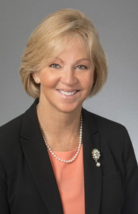 Wilson, who retired from the U.S. Army as a chief warrant officer 5, has earned two degrees from Excelsior College and is on track to earn a Master of Public Administration from Excelsior in 2021.
With this partnership, Military Women’s Memorial employees, members, and their spouses/domestic partners are eligible for partnership benefits at Excelsior College, including discounts of up to 20 percent off tuition.
David Schejbal, PhD, president of Excelsior College, said, “We are excited to work with the Women In Military Service for America Memorial Foundation. Excelsior’s online courses and special partner tuition price allow greater access for veterans and members of the Women In Military Service for America Memorial Foundation. Students can also save time toward degree completion with Excelsior’s generous credit aggregation policy that includes previously earned college credits and credit awarded for military experience.”
Since March is Women’s History Month, which encourages the study, observance, and celebration of the vital role of women in American history, this timely partnership will help those who have served in the military and their families to further themselves and their careers. In 2020, approximately 35 percent of Excelsior College students are active-duty servicemembers and 14 percent are veterans.
# # #
Media Contact: Alicia Jacobs, ajacobs@excelsior.edu, 518-410-4624
About Excelsior College
Excelsior College (excelsior.edu) is an accredited, not-for-profit online college focused on helping adults complete their degrees and advance their careers. The college contributes to the development of a diverse, educated, and career-ready society by valuing lifelong learning with an emphasis on serving individuals historically underrepresented in higher education. Founded in 1971, Excelsior meets students where they are — academically and geographically — removing obstacles to the educational goals of adults pursuing continuing education and degree completion. Our pillars include innovation, flexibility, academic excellence, and integrity. Learn more at excelsior.edu.
Media Contact: Kaprice Dyson, Director, Strategic Communications, communications@womensmemorial.org
About The Military Women’s Memorial
The Military Women’s Memorial, a 501c3 nonprofit organization, is the only historical repository documenting all military women’s service. It is located at the ceremonial entrance to Arlington National Cemetery and features an education center, interactive exhibitions, a world-class collection of military women stories, and engaging programs and events for all generations. Donate to this Charity Navigator 4 Star Organization and join the National Registration Campaign to help share the stories of women veterans. Find out more about us at www.womensmemorial.org or by following us on Facebook, LinkedIn, and Twitter. #HERstory #AppreSHEation
Community Care
Jenny Wensink Goes Back to School to Help People in Need
In these difficult and changing times, the last thing people want to worry about is whether their family members can see a doctor. Many people are forgoing a doctor’s appointment for an illness or a routine checkup because they can’t afford it during the COVID-19 pandemic. Luckily, community health centers are open to provide people with the care they need at little or sometimes no expense. Excelsior College student Jenny Wensink, of Sheboygan, Wisconsin, is dedicated to making sure people in her community get the care they need at Lakeshore Community Health Center, where she is the medical program manager.
“I feel strongly about people being able to access care. I know how expensive medical care is even if you have insurance, and so the mission for our health center is that we provide access to care regardless of your ability to pay,” says Wensink, who is pursuing a Bachelor of Science in Health Sciences. Lakeshore Community Health Center in Sheboygan runs in part thanks to federal grants and has programs in place to provide financial discounts for patients who qualify. If they meet certain criteria and are willing to share personal information, they can receive quality care for dental exams, women’s health, mental health, routine checkups, and more at little or no cost.
As medical program manager, one of Wensink’s responsibilities is running the center’s vaccine program at the two locations, in Sheboygan and Manitowoc. This involves mentoring and teaching staff about vaccines and how to administer them, which is something she is passionate about. Many families may not have their children vaccinated because of the cost. Wensink partnered with a medical assistant who was successfully operating a previous vaccine program and together they serve as members of the local immunization coalition. “We work with other health care providers and other health systems and really get the word out about how important it is,” she says, referring to vaccinations for children.
Wensink also works closely with behavioral health consultants who serve as an extension of the medical providers. They assist patients seeking mental health support, needing traditional therapies, looking for help with medication compliance issues, and more. “We’re trying to take the stigma out of mental health. So, we have found that if we add these behavioral health counselors into our medical team, our patients are more likely to receive the mental health services that they need,” says Wensink.
Patients have been able to continue to receive their mental health and other types of treatment during the pandemic. To administer COVID-19 testing and to see sick patients, the center constructed an acute care center in a two-story garage on its property. Staff also instituted telehealth services and can speak to patients by video or telephone. Wensink’s responsibilities have not changed too much during the pandemic, but she helps enforce the need for personal protective equipment and also participates in local health committee meetings.
Wensink has a strong passion for helping others, something that has been a part of her since she was young. Wensink was previously the medical assistant supervisor and she realized she wanted to do more for the people who came to the center for care. After being promoted to medical program manager, she decided to go back to school for a bachelor’s degree. “It wasn’t requested of me, but I believe in lifelong learning. It’s really important and there’s so much more that I probably could give if I just had a little bit more education,” she says.
Wensink learned about Excelsior when she checked the message boards on the American Association of Medical Assistants website. “I noticed through the AAMA that they were partnering with Excelsior and that my credits would all transfer, but I also would get some discounted tuition. And I was like, well, how can that be bad?” she says. Most of her credits transferred, which was a big plus because it meant Wensink didn’t need to retake any courses. “I felt like ‘hey, I’m kind of halfway through this already.’ It made it seem more doable.”
At first, going back to school was difficult because Wensink had not been in school for many years and she was concerned about paying for college while her two daughters were also in college. She also had to learn good time management skills quickly. She soon realized her classmates were all in the same boat—working full-time with families and other responsibilities. Now, she is over a year into the bachelor’s of health sciences program.
So far, many of the management skills Wensink has learned have transferred to her job and they have enabled her to connect with her staff more effectively. She is also able to communicate better with other team members thanks to her interpersonal and management courses. This fits right in line with the culture at Lakeshore Community Health Center, which supports building strong work relationships.
By earning her bachelor’s, Wensink plans to use her skills and knowledge to better assist her community and help to expand services offered by the clinic. She likes the clinical aspect of her job, though, and wants to keep working with patients, so she would like to find a way to incorporate that and management into a future position. She may take a break from schooling after she earns her bachelor’s, but she’s not ruling out more education. If it means helping other people, she’s willing to do whatever it takes. “My favorite part, really, is being able to help somebody. For me, it’s making sure that my community is taken care of.” Learn about how you can help the people in your community physically and mentally with an Excelsior Bachelor of Science in Psychology or a Bachelor of Science in Social Sciences.
Female Veterans – Ready to Fill Cybersecurity Jobs!
*The original article first appeared in “United States Cybersecurity Magazine,” Spring 2019 issue. It has been adapted and republished here with permission.
Current State of the Cybersecurity Industry
The growth in cyber threats has created a robust cybersecurity labor market with various well published reports estimating 3.5 million cybersecurity jobs will be unfilled by 2021. Although cybersecurity is a promising career path, it lacks gender diversity. Globally, women lack representation in the cybersecurity profession, accounting for only 11–14 percent over the past five years. For example, research from Cybersecurity Ventures predicts women will represent over 20 percent of the global cybersecurity workforce by the end of 2019. Although this is a promising statistic, 20 percent is still too low for global estimates.
One way for the cybersecurity industry to address the workforce shortage and gender diversity challenge is to focus on hiring female veterans who have served in the United States Armed Forces. According to the U.S. Department of Veterans Affairs, there are over 20 million veterans in the U.S. and female veterans account for 9 percent of the veteran population. That’s almost 2 million female veterans who are highly skilled and have received specialized training in fields that are applicable to meet the demanding cybersecurity jobs the industry is seeking to fill.
Some Challenges Facing Female Veterans Entering the Cybersecurity Workforce
Female veterans are fortunate to have practical experience and possess the same technical and soft skills (e.g. leadership, problem-solving, critical thinking, etc.) as many of their male counterparts. However, many of these women face challenges finding employment in the cybersecurity industry. Challenges such as discrimination, lack of understanding transferable skills, and unstable employment are serious barriers female veterans must overcome to have a successful cybersecurity career path.
Oftentimes discrimination against female veterans is more pronounced because the military is male-dominated and female veterans are considered a minority in the overall veteran population. However, there are several cybersecurity organizations that have been created in the last 5–7 years, such as Women in Cybersecurity (WiCyS) and the Women’s Society of Cyberjutsu (WSC). These organizations provide supportive networks for women in the cybersecurity field. These organizations help women to build their professional networks. Additionally, they function as support for mentorship, training, knowledge-sharing, and employment opportunities.
Another challenge for female veterans is there’s no direct mapping of military careers to current cybersecurity jobs. These jobs would allow veterans to express their transferable skills on their resume. The lack of understanding by many employers when it comes to hiring veterans gets further complicated when the veteran is unable to articulate the importance of their military jobs. Also, employers often do not understand how their skills are applicable to the cybersecurity domain.
Finally, female veterans tend to experience higher unemployment than their male veteran peers, which is concerning since many female veterans may be the main provider of their household and/or a caregiver of a family member. According to Hire Heroes USA, “post-9/11 veteran unemployment rate of 5.6% for women remains higher than the 3.6% national average.… women veterans are also between two and four times more likely than non-veteran women to experience homelessness.” These statistics are extremely troubling considering cybersecurity jobs are growing at exponential rates with starting salaries that tend to be higher than the average salaries in other fields. According to Indeed, a job-search engine, the average starting salary for an entry-level cybersecurity analyst is over
$56K annually; these salaries tend to increase with added experience, training, academic credentials, and/or industry certifications.
Female Veteran Military Careers That Are Transferrable to Cybersecurity
Several popular military career fields for women provide the knowledge, skills, and abilities (KSAs) for them to thrive in the cybersecurity industry. Military career fields such as intelligence, engineering, and applied science, as well as computers and computer science consist of technical work roles that are “more compatible” to the cybersecurity field. However, cybersecurity is a multi-disciplinary field. Female veterans with experience in public affairs, marketing, and multimedia can apply their KSAs toward cybersecurity jobs that utilize social media and digital marketing. Veterans from these careers understand how to leverage social media to elevate business content while keeping information and business profiles secure on the Internet. Given the amount of cyber-attacks that have occurred over the past 5 years that have led to public data breaches of over 200 million records (e.g. Equifax, Target, and OPM), having personnel who are well-versed in public relations, communications, and personnel records are key to protecting corporate brand and instilling public confidence.
Another popular career for female veterans is within health care. Female veterans who have training in counseling and social work may not seem like an ideal fit for cybersecurity jobs; however, studying human behavior as it relates to cybersecurity has become a growth area. According to IBM’s Cyber Security Intelligence Index, it was revealed that over 90 percent of cyber breaches occur because of human error. Jobs like behavioral analysts and other titles associated with human behavior (e.g. behavioral analytics, human-computer interaction, etc.) are needed more than ever to combat human cybersecurity challenges.
Finally, female veterans who have training in career fields such as logistics, transportation, and maintenance are essential to the growing cybersecurity critical infrastructure sectors, which consist of the most essential aspects of our society to include energy, financial services, transportation, and emergency services. Female veterans who have knowledge, skills, and abilities to assess risk, manage complex systems, and are trained to respond to incidents would be prime cybersecurity candidates to protect and defend these most vital assets.
Conclusion
Cyber threats are increasing in volume, velocity, and veracity. Therefore, it is imperative to fill cybersecurity jobs with talented, skilled individuals who possess the requisite experiences, knowledge, and training necessary to meet our national security needs. In addressing diversity and talent, female veterans can address the cybersecurity workforce and diversity needs. Study a Bachelor of Science in Cybersecurity.
Sean Hudson, MA in Liberal Arts ’18
Sean Hudson, MA in Liberal Arts ’18, of Upper Darby, PA, is living his childhood dream of being an educator as a teacher leader in Philadelphia. Hudson is a two-time graduate of Excelsior College. He also earned his Bachelor of Science in Liberal Arts in 2013. He is “passionate about and committed to removing the roadblocks that prevent urban and black students from reaching their educational potential.”
How to Choose a Degree
Some students have no difficulty when it comes to choosing a degree program. They have already decided on their profession. But many others feel uncertain about the path they want to follow and even unsure about where to start. For those who are less certain about a profession, it is helpful to make an honest assessment of talents as well as investigate the salaries, job outlook, and quality of life associated with different careers.
Fortunately, students have plenty of options when it comes to finding a degree program that aligns with their career plans. Online education has freed students from the restrictions of geography, allowing them to enroll in a degree program with any school that offers online programs. Still, deciding between those options can prove challenging.
A quick way to jump-start a career search is to look through a college program catalog and see the type of courses are required for different majors. Excelsior College offers online academic program catalogs that include course descriptions for undergraduate degrees in business, health sciences, liberal arts, nursing, public service, and technology.
Reviewing a program catalog is a smart first step for those at the beginning stages of choosing which degree to earn.
Factors to Consider When Choosing a Degree
Most students start their higher education journey with a simple question: “What college degree should I get?” This question is not always easy to answer, but the following tips can prove helpful in reaching a decision.
What Are Your Talents?
A career search must start with an honest assessment of your talents. It’s also important to choose a degree that offers the chance to improve skills in an area of interest. Passion for the career is also critical and will keep you focused on completing your degree when faced with challenging course material.
Career Pay
The potential salary for a specific career should not become the sole factor for choosing a degree program. Few people enjoy working at jobs they don’t like even if they make a great deal of money. However, it’s important to set expectations for what your potential career will pay. Check with the U.S. Bureau of Labor Statistics (BLS), the official source for salaries in the United States.
Career Outlook
Another important factor is the outlook for future job growth. This is especially important as technology continues to rapidly change the workforce. The BLS provides projections in this area. Some of the jobs expected to grow the fastest include nursing, software developer, general operations manager, financial manager, and management analyst.
Quality of Life
This area is more difficult to quantify. Everyone has their own opinion about the type of life they would like to live. For some, the long hours of a business entrepreneur sound fine. For others, a schedule that allows more time for family, friends, and relaxation is better. This is a very personal decision, but it helps to talk with people who currently work in a field you are considering so you can better understand the life they lead.
Earning an Associate Degree
Deciding on a lifelong career is difficult to do at a young age. Even working adults may not yet know exactly what they want to do. An option that makes sense for many is to first earn a two-year associate degree before moving on to complete a bachelor’s degree.
Excelsior College officials know that an associate degree can offer a great stepping stone for students who remain unsure of their full-time career choice. By earning an associate degree online, they knock out many of the general education requirements found in almost every academic program.
Those include general education requirements in English, Ethics, Humanities, Social Sciences/History, Natural Sciences, Mathematics, Arts & Sciences electives, and Information Literacy.
By taking their time to carefully consider all options, potential students can eventually choose a degree and arrive at a solid choice for a career field. Whether they start with an associate degree or move immediately into a bachelor’s program, the options offered through online learning increase the chances they will choose a degree program that suits them best. Learn more about Excelsior College’s Associate in Nursing Degree.
Excelsior Celebrates International Women’s Day
Dr. Amelia Estwick Interviews Cybersecurity Student Stephanie Barnes
My name is Dr. Amelia Estwick, director of the National Cybersecurity Institute at Excelsior College. In celebration of International Women’s Day and Women’s History Month, I’m joined by current Excelsior College graduate student Stephanie Barnes to discuss her experiences in the cybersecurity field. Stephanie is an IT/cybersecurity dual degree student, completing her graduate studies. Previously, she graduated with a BS in psychology from Florida A&M University. After years of working as a direct hire for the federal government and then as a federal government contractor overseas, she decided on a career change due in part to her interest in coding and hobbies involving tinkering with computers. A lifelong learner, Stephanie finds cybersecurity an endless well of puzzles and emerging knowledge that keeps her interested and invested in discovering solutions. I thought it would be a great opportunity to ask Stephanie some questions about her interest in the cybersecurity field.
Q: Why did you decide to even pursue a master’s in cybersecurity?
A: Well, like you said, I was overseas working as a contractor doing low-level security in Iraq, actually. And I decided that when I came back home that I couldn’t go back to the job that I had been working, and I wanted to basically change my life. And I had always been interested in technology, but I’d never really pursued it. So I started teaching myself to code in Python. I did a little bit of learning HTML and CSS. And then I just started doing MOOC classes online and took it from there, and then started looking at master’s degree programs, because I already had my bachelor’s. So I wanted to move forward.
Q: How would you say your degree has benefited you thus far?
A: I think that when hiring managers look at my resume and see that I’m on track to get my master’s, I think that it really has helped me, because I’ve had people mention it in interviews. And I think it’s been really impressive for them, because it shows that I have the go-get-it kind of attitude that they’re looking for, that I’m ready to self-start and take it on my own. I don’t have to have somebody driving me to do anything, because I’ve already shown them that I’m driven.
Q: You’ve been an active participant in our student chapter of the National Cybersecurity Student Association where you’ve been a team captain. How has that experience been for you?
A: Oh, that experience has been great. I really love doing NCL [National Cybersecurity League]. When I first got into doing it, I did not know what I was going to be doing. I hadn’t really done any competitions. It was one of the first ones that I’d ever done. But all the students that participated, they’re really helpful. The chat has been great. They helped me out a lot.
Q: I’m so glad that you’ve mentioned the camaraderie because I think it’s so important in this field to build a network and to build a support team, especially as a woman. Unfortunately, when we talk about International Women’s Day, one of the themes is to take action for equality and according to recent reports, women are holding only 20 percent of cybersecurity positions. That number is much less when you take into account race and ethnic women holding cybersecurity positions. As an African American woman, how do you think your race or your ethnic background has impacted your cybersecurity career pathway?
A: I feel like I might be lucky in that extent only because of the location where I live. I live outside of Atlanta so there is a good multicultural community, and there are a lot of women cybersecurity groups, both in Atlanta and online. And I’ve been able to connect with a lot of women, and especially a lot of Black women not only online, but in the community. And so I’ve seen a great deal of people that look like me in the workforce. But I know that it’s still an issue nationwide.
Q: What are some of the skills that you have acquired as an Excelsior student that you think employers would be interested in?
A: I think people think that employers look basically for employees to know a certain technology, but I don’t really feel like that’s the case as much. I think it’s more so about the attitude that you bring. [I’m] not saying that hands-on skills are not worthy. They are. But there are things that you can learn very quickly on the job. Like, when I first got the first position I held in cybersecurity, I was a junior stock analyst. And I didn’t know half the tools that I learned while on the job. But because I had a willingness to learn, I think that that is something that’s really important. I think that’s something that managers look for, that you have a willingness to learn, that you have an attitude in that you can do it. Like, you can’t do everything, and we know that. But you’re willing to reach out and say, hey, I don’t know this. I think in any position, you need to be able to ask for help, you have to be able to seek help, and you have to have the willingness to learn. And I think that’s helped me in my career and [to] move forward in it.
Q: What advice would you give anyone pursuing a cybersecurity field?
A: Oh, I would say dive in. Like I said, I started doing just MOOC classes online, taking Coursera classes…I took that course, everything that I could get my hands on. But bottom line is kind of just dive in. Find the small courses first. The small, free things that they offer online and try it. You’ll find the path that you’re meant to take if you try little bits at any time, if you’re open to it.
Re-starting a Dream
Nicole Carr benefits from Excelsior’s partnership with Re-Up Education
Nicole Carr, of Brooklyn, New York, had some college experience but no degree, and through a partnership between Excelsior College and ReUp Education, she is now on her way to earning an Associate of Science in Administrative/Management Studies.
ReUp Education helps support students like Carr who have some college experience and are balancing other life commitments outside of their studies to return to school and graduate. The company uses predictive analytics technology, data, and personalized coaching to re-enroll these students—who had previously stopped out of college for one reason or another—and keep them progressing through their courses to degree completion.
Carr enrolled at Excelsior in May 2020 and has seen immediate correlations between her work and the courses. A financial arbitrator with The Debt Management Group, a debt consolidating firm, she negotiates contracts for clients to help minimize or eliminate their debt. “I’m reading contracts and reading statements, and I try to either eliminate the debt or get into payment plans or settlements and lower their [the client’s] costs or what they’re trying to pay,” she says. Her Excelsior courses have helped in her work because they cover various business topics, including negotiation tactics, working with Excel spreadsheets, and dealing with global solutions—all themes Carr deals with on a daily basis.
Carr had decided it was time to go back to school when she learned about ReUp Education. “I actually saw a commercial for ReUp…and then once I called them and got the information, I immediately fell for the program,” she says. “What I like best about their program is their ability to understand what you want and help you to navigate those steps. Then once you’re actually at the point where you figure out what school you want to go to, they also help you with registration. …They stick with you. And I think that is so amazing.” Carr also liked that ReUp Education partners with Excelsior, which she says she was drawn to because it caters to adult learners with other life responsibilities. Carr also says she appreciates Excelsior’s hands-on learning opportunities and staff and instructor support.
Carr also receives support from her coaching advisor, N’Digo, at ReUp Education. The assistance ReUp’s coaches provide help students like Carr stay engaged in their studies and find answers to any questions and concerns. “I love her [N’Digo]. She’s so amazing. I told her when I graduated, I wanted her to come to my graduation. She is so personable, and it wasn’t just about like the basic stuff with school…. It was almost like a life coach,” says Carr.
Carr plans to use her degree to advance in her career. “I want to run my own business, and I want to be a CFO. That’s my ultimate goal for my degree,” she says. It runs in the family; Carr’s father, an U.S. Air Force veteran, started his own real estate business in Puerto Rico after retiring from service. Carr plans to pursue a master’s degree with Excelsior to meet her goal, and she encourages others to look into Excelsior and ReUp Education when pursuing their educational dreams. She says, “If you go to the ReUp program, not only do they help you step by step along the way, but they also take the initiative to help you reach out to Excelsior if you have questions…they bridge that connection for you.” Excelsior’s Bachelor of Professional Studies in Business and Management is a great way to prepare graduates for a successful career in business. Learn more!
Cannabis Science Tech: Excelsior College’s Cannabis Education Program Strengthens Interest in the Industry
Feature on Excelsior’s Graduate Certificate in Cannabis Control. https://www.cannabissciencetech.com/view/excelsior-colleges-cannabis-education-program-strengthens-interest-in-the-industry
What is the Difference Between Deferment and Forbearance?
Both deferment and forbearance allow students to postpone student loan payments. The biggest difference, however, is that federal subsidized loan interest does not accrue during a deferment, while it does with a forbearance. A forbearance can still be a good choice if a student needs to stop payments and does not qualify for deferment.
In addition to interest, deferment and forbearance have other key differences students should understand. Excelsior College offers both deferment and forbearance information and support for students who need to delay loan payments.
Qualifying and Applying for a Deferment
Deferment and forbearance can temporarily postpone payments on a federal loan, according to the U.S. Department of Education. One key difference between the two involves how students qualify.
Students can seek a deferment if they have:
- Made payments on time, are in a grace period after graduation, or have previously been granted a deferment or forbearance.
- Enrolled in school as at least a half-time student, defined as 6 credit hours per term for undergraduate students and 3credits per term for graduate students.
The first step to seek a deferment is to contact your lender. Ask them for the form that matches your reason for seeking deferment. These reasons can include economic hardship, unemployment, Peace Corps service, and military service.
Lenders may still charge interest on loans, even with a deferment. It depends on the type of loan. The Department of Education lists the types of loans for which students typically do not have to pay interest with a deferment. That list includes direct subsidized loans, subsidized federal Stafford loans, and federal Perkins loans.
Qualifying and Applying for a Forbearance
A forbearance is typically easier to obtain than a deferment. That’s because a forbearance is not tied to the type of loan or when you obtained it. However, it’s important to remember interest will accrue during a forbearance, which typically lasts for one year.
Students become eligible for forbearance because of a variety of reasons, including financial hardship, poor health, inability to pay the loan back during the repayment term, and monthly payments that exceed 20 percent of a borrower’s monthly income.
To obtain a forbearance, students should contact their lender, explain the situation, and ask for appropriate forbearance application forms.
Other Financial Aid for Excelsior College
Excelsior College works with students if they experience difficulties with their loan payments. The College also offers special rates for students who work through one of its partners, which include private companies and the military. If applicable, check with your employer or branch of the military to find out if they have a partnership with Excelsior College.
Excelsior College offers partnership rates for the application fee, tuition, the student service fee, and the graduation fee. The rate applies to students in undergraduate and graduate programs.
To explore whether you qualify for those rates or for a deferment or forbearance on your student loan, contact the Excelsior College’s financial aid office.
AEFIS Academy Virtual Community Event: Democracy and Assessment Series.
Democracy & Assessment Series— Your Voice Matters! Episode 1 Setting the Stage
First episode in a four-part series focused on exploring and unpacking the relationship between democracy and assessment. In this episode, Foisy discussed this topic with Dr. Gianina Baker, Acting Director, National Institute for Learning Outcomes Assessment, Dr. David Dees, Chief Administrative Officer, Kent State University at East Liverpool, and Natasha Jankowski, Higher Education & Assessment Consultant.
